
We are now at our halfway point of our circumnavigation, and time to prepare Mai Tai for our next Ocean crossing and beyond, back to New Zealand. In this blog we give you a brief tour of our past 3 months. I have literally hundreds of photos, but I have selected only a handful for this blog to give some idea of the fabulous places we have visited.
This life may sound quite romantic and one big holiday, but in reality, the definition of this cruising lifestyle is “a life of boat maintenance in exotic places”.
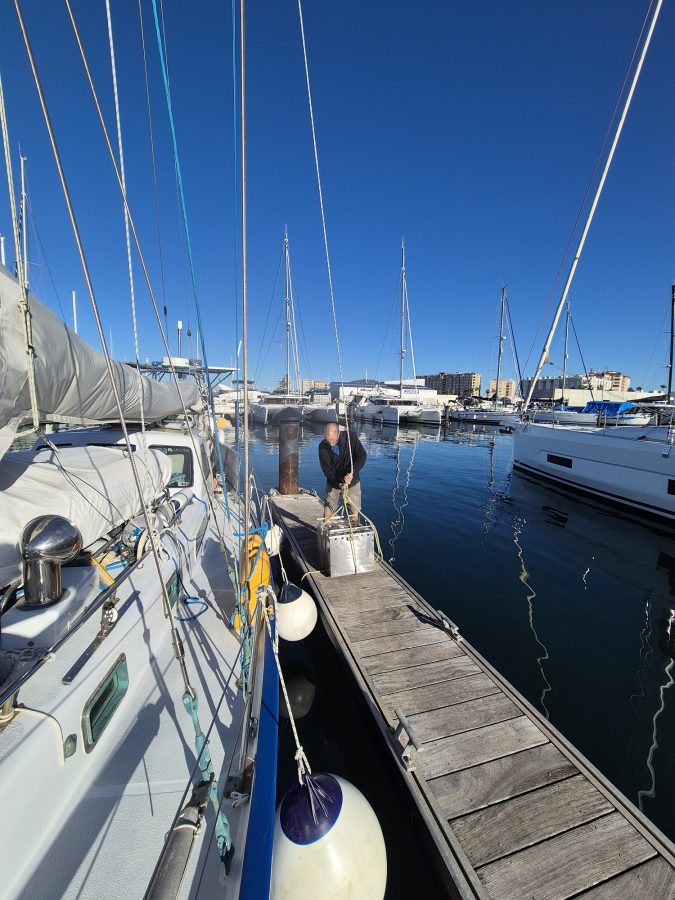
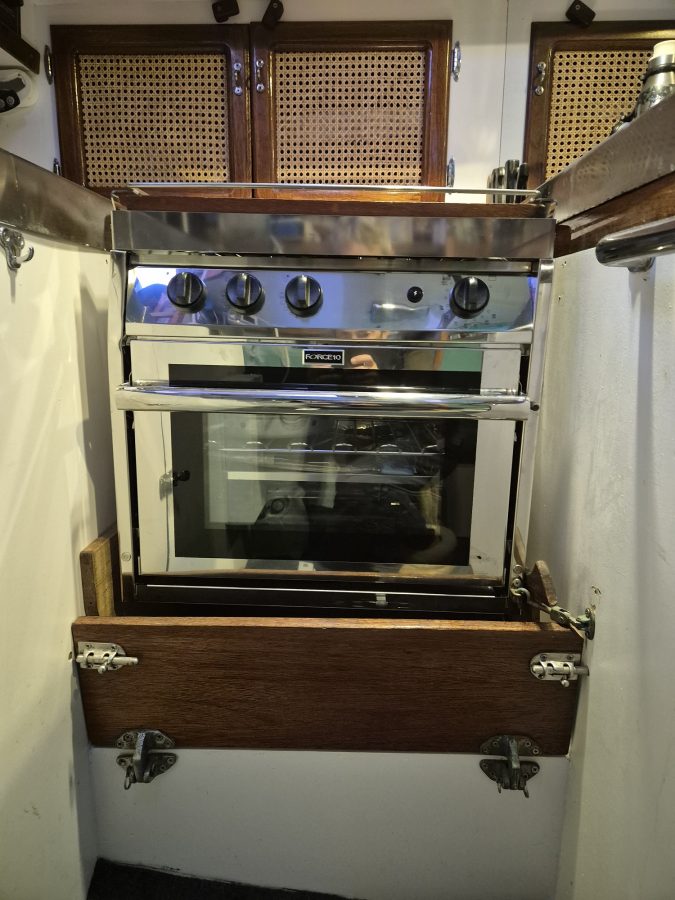
This happens to be very true, but exotic places are not always very practical for buying boat parts, having items shipped and simply being able to do the repairs. We were at a point where we needed 2 new Solar panels, 3 new lithium batteries and a new 3 burner stove with oven. All large items. We had heard about a marina next to Gibraltar, in La Linea, Spain, who allow us to use their address for shipping, plus there are good ship chandlers nearby for local supplies. So that is where we were headed.
Understandably, we need to be actually in the marina before goods can be shipped, so that we can pick them up upon delivery. We had booked in advance for 1 month at Alcaidesa Marina, La Linea, Spain and began arranging for our goods to be delivered. The Solar panels were being sent from within Spain, the oven from Germany and the lithium batteries from China. This is never easy with all the different courier services, customs clearances etc.
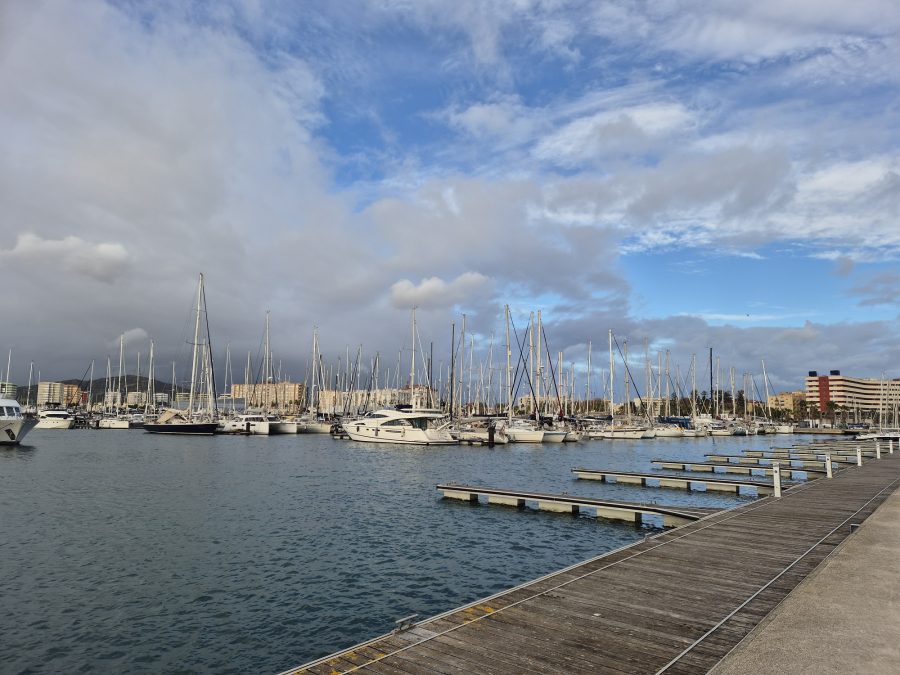
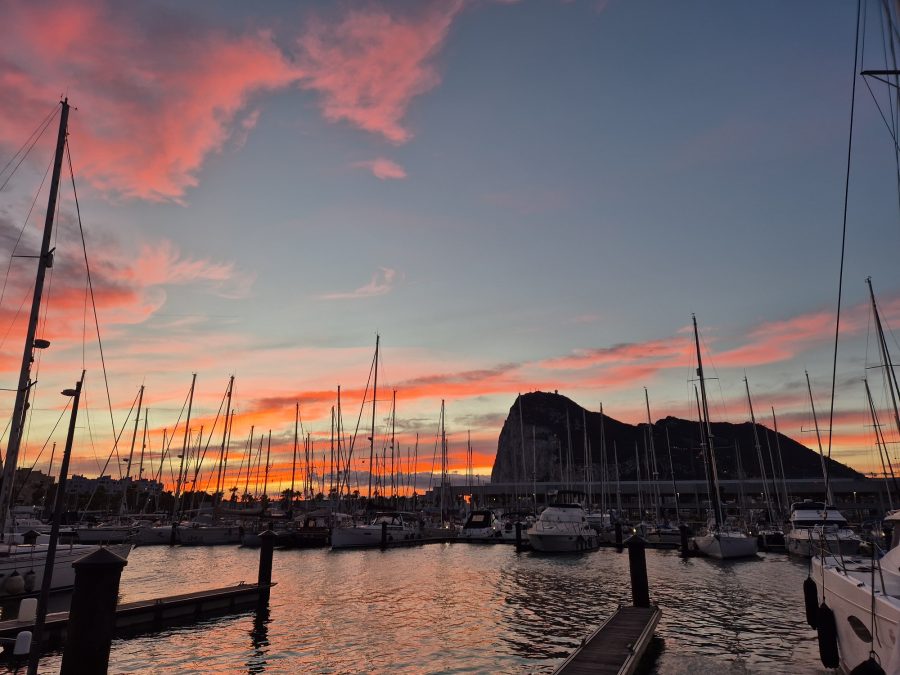
The Marina was perfect, with stunning views over to the Rock of Gibraltar from our berth and surrounded by many other cruisers stopping in here on their way westward. Also, a safe place to leave Mai Tai while we visit this beautiful part of the world waiting for the delivery of our goods.
Our first trip was to Portugal to visit our good friends who live in Tavira, not far from the border of Spain.
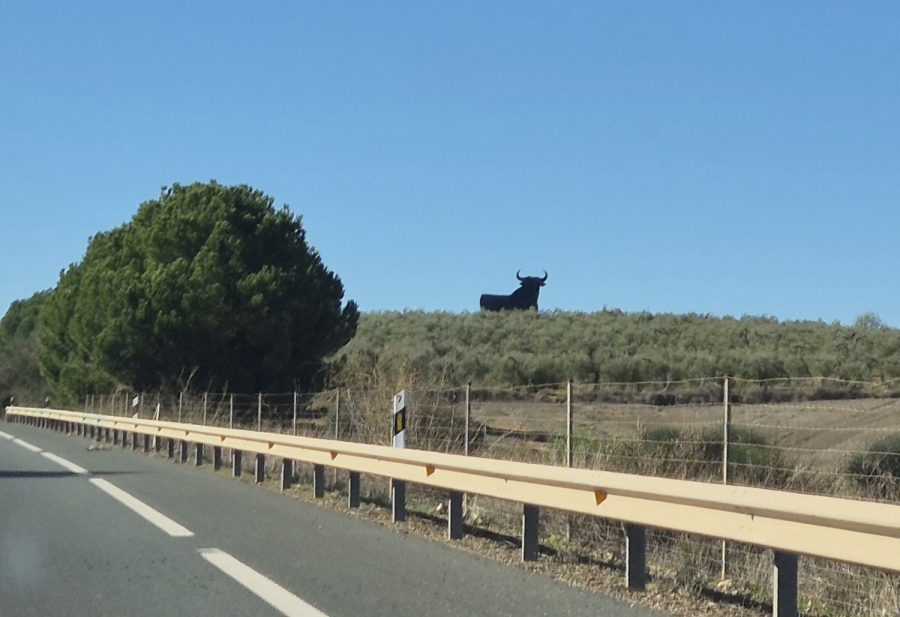
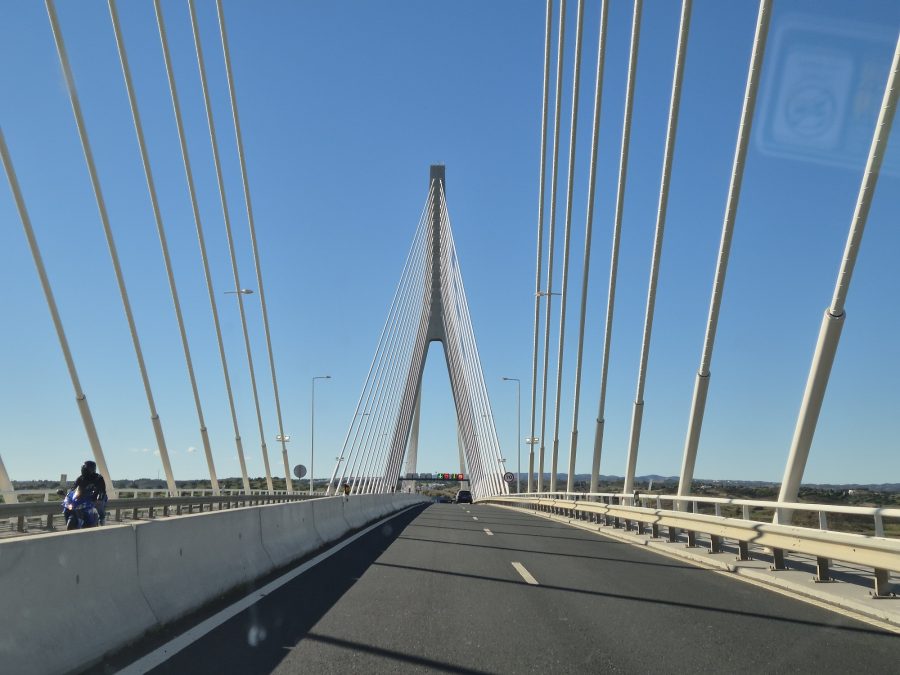
It was a short drive into beautiful Tavira to meet up with our friends, Karen and Henry whom we knew from when they lived in Nelson, New Zealand.
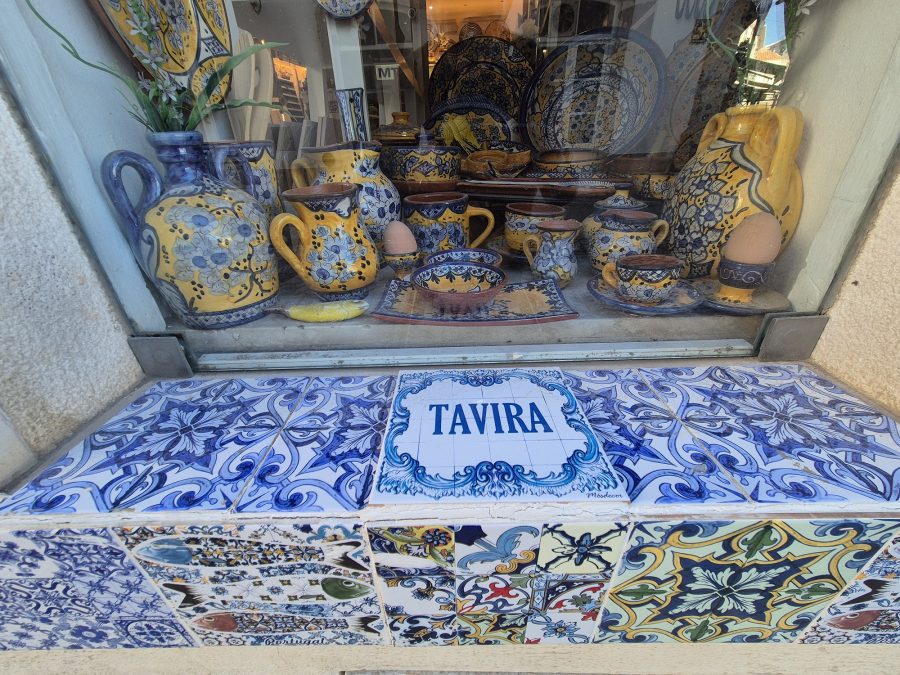
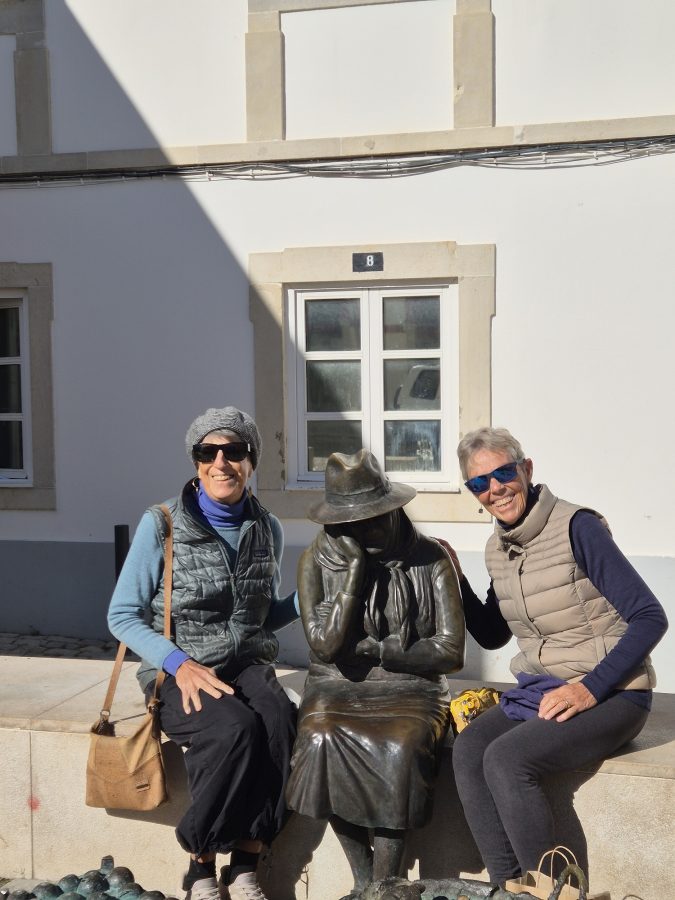
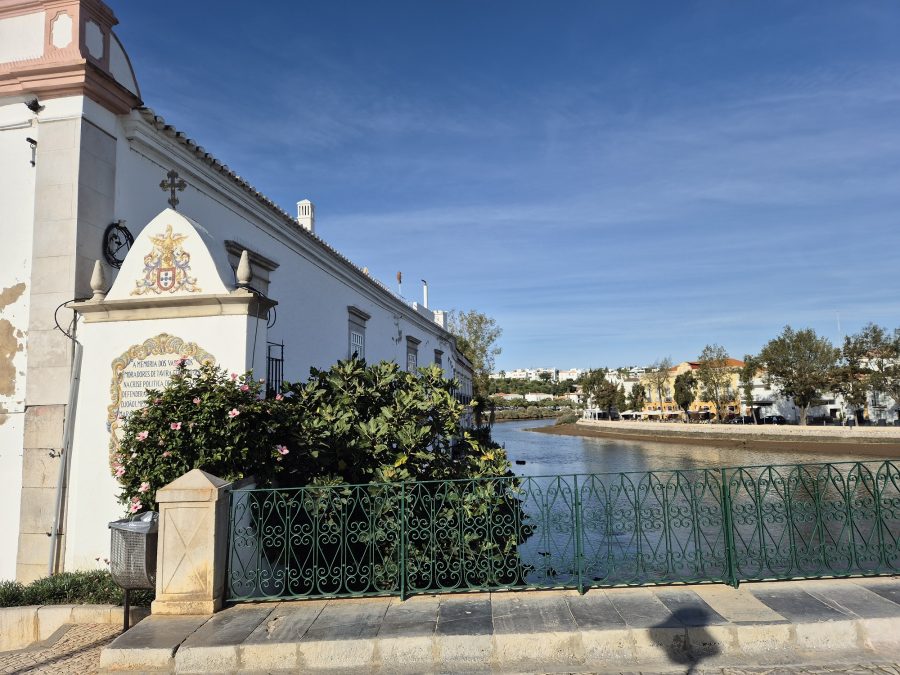
We see incredible tiles everywhere, but we thoroughly enjoyed an exhibition of Portuguese tiles, showing the different styles from various parts of Portugal and over the centuries.
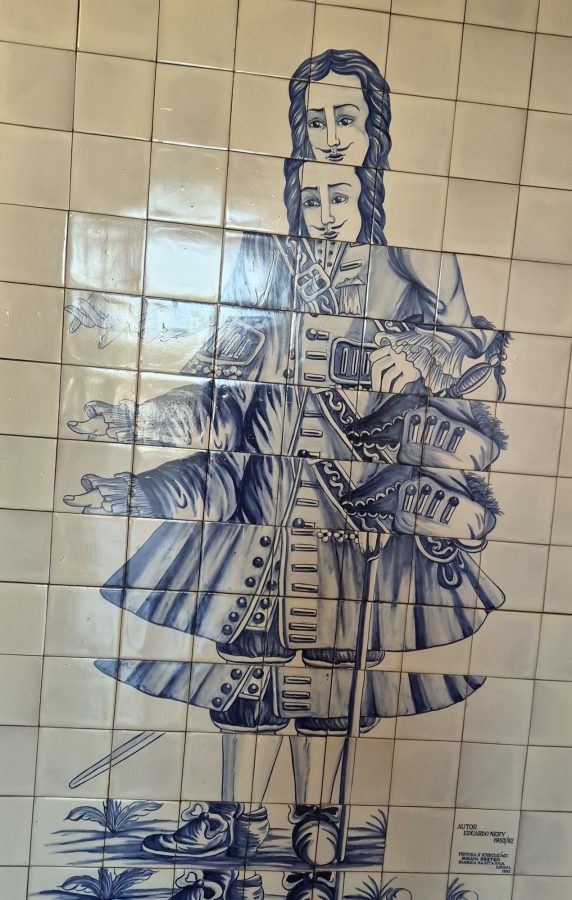
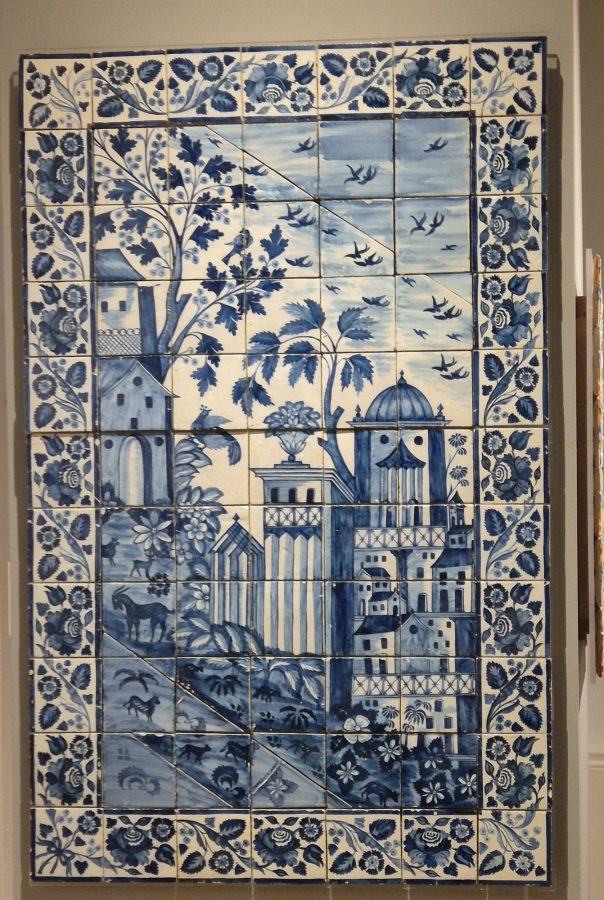
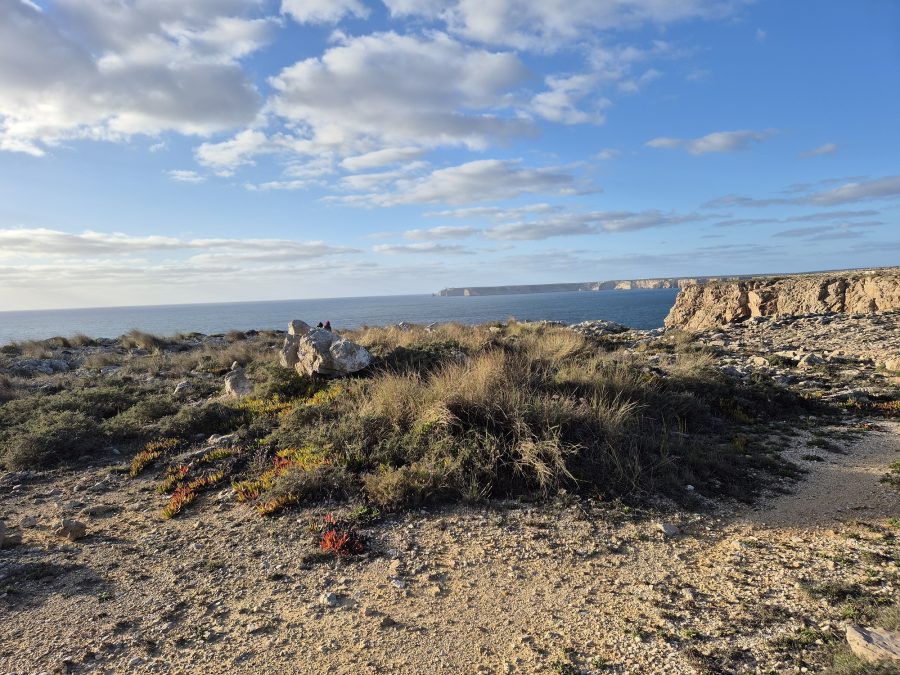
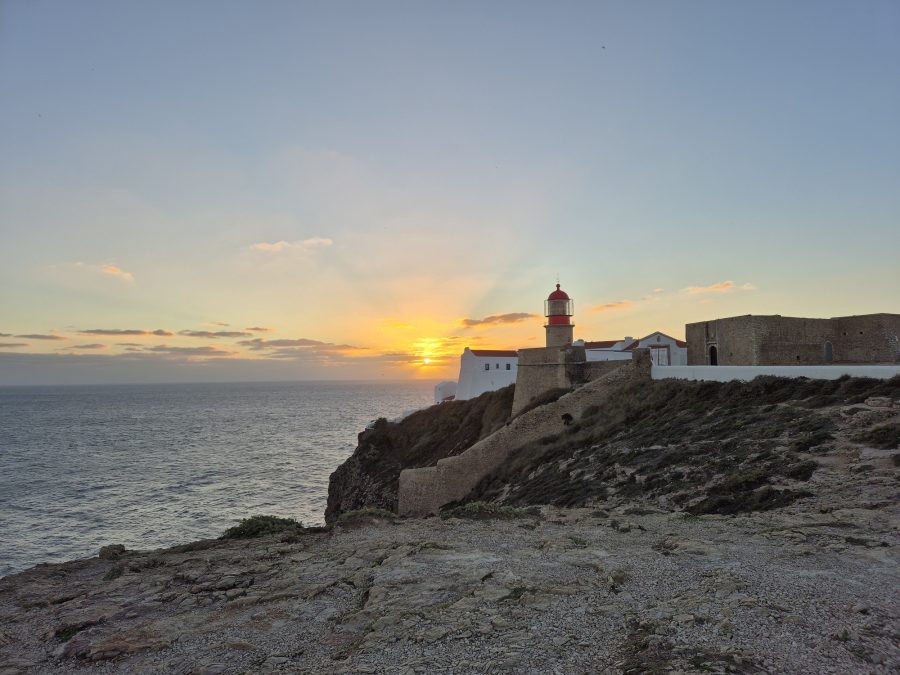
Over the next 5 days, Karen and Henry kindly showed us around southern Portugal, The Algarve, right over to Sagres and the Cap St Vincente lighthouse at the southwestern most point of Europe. Sagres was once believed to be the end point of the earth.
The Guardiana River makes a natural border, about 800kms, between Western Spain and Eastern Portugal. Some sail boats have come up here to spend the winter. We, however, drove 100kms up to the delightful town of Alcoutim, a town on the banks of the river, to have lunch overlooking the Spanish town of Los Molinos.
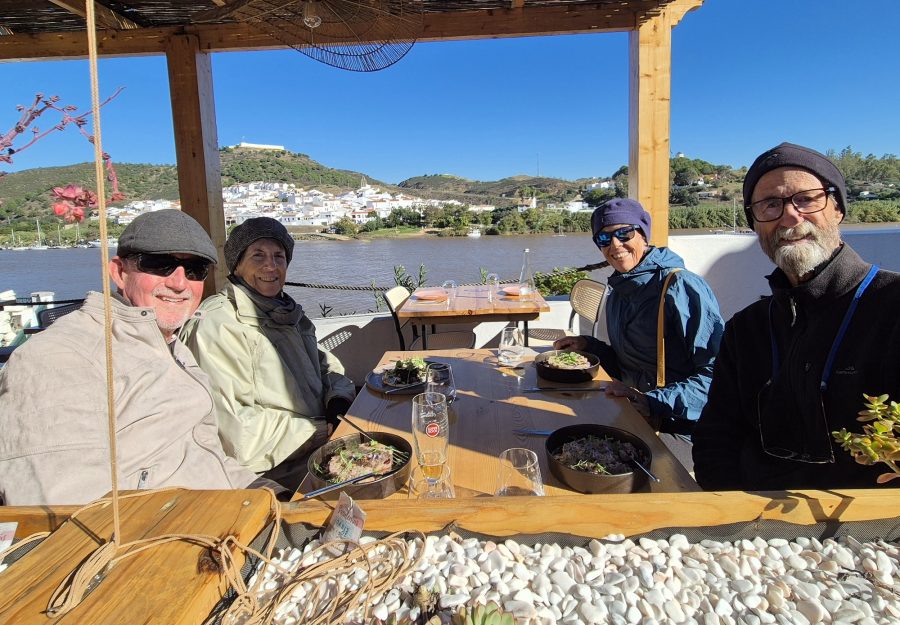
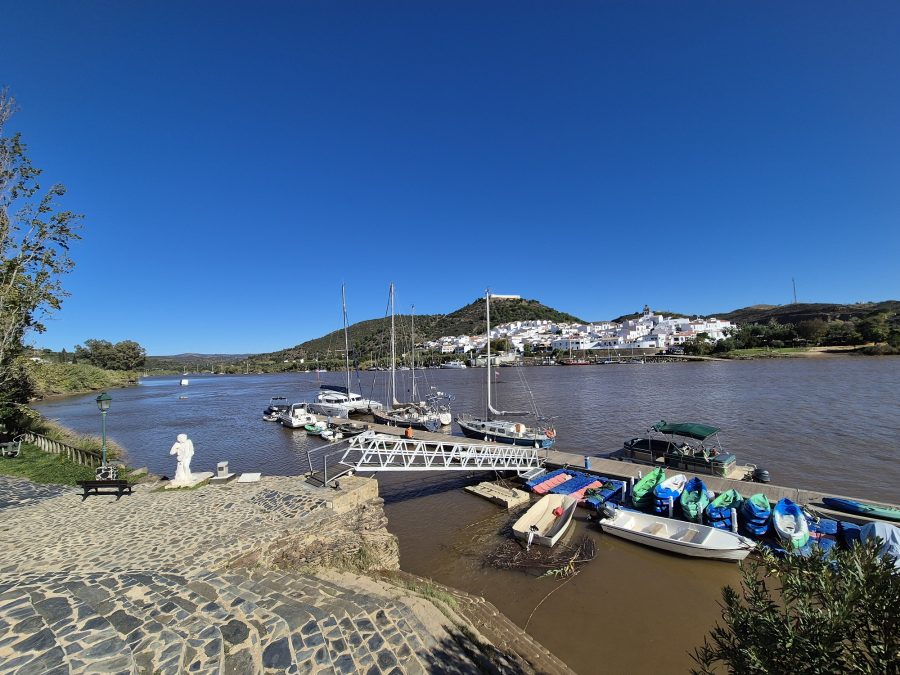
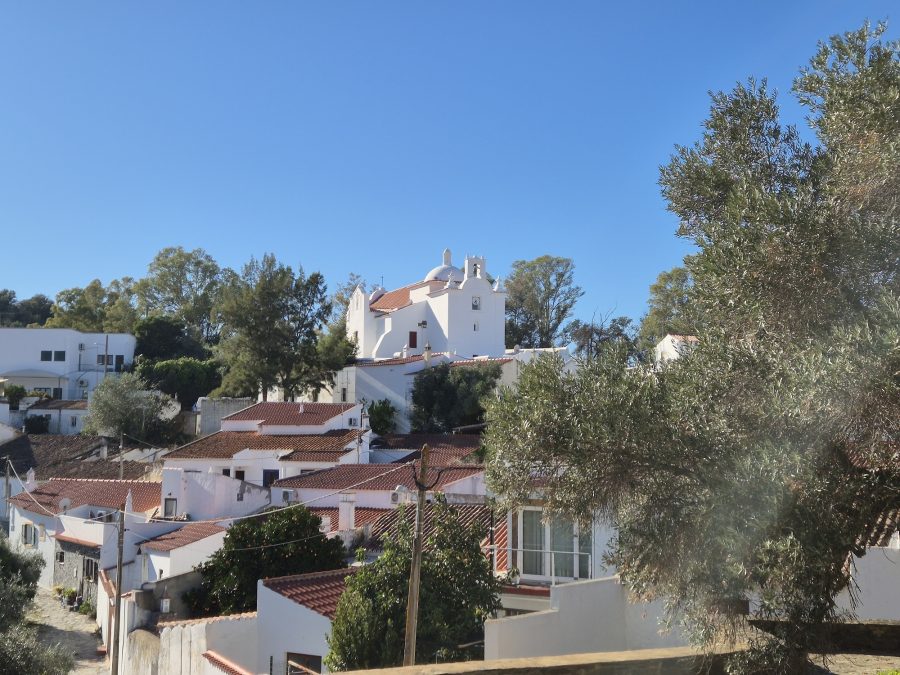
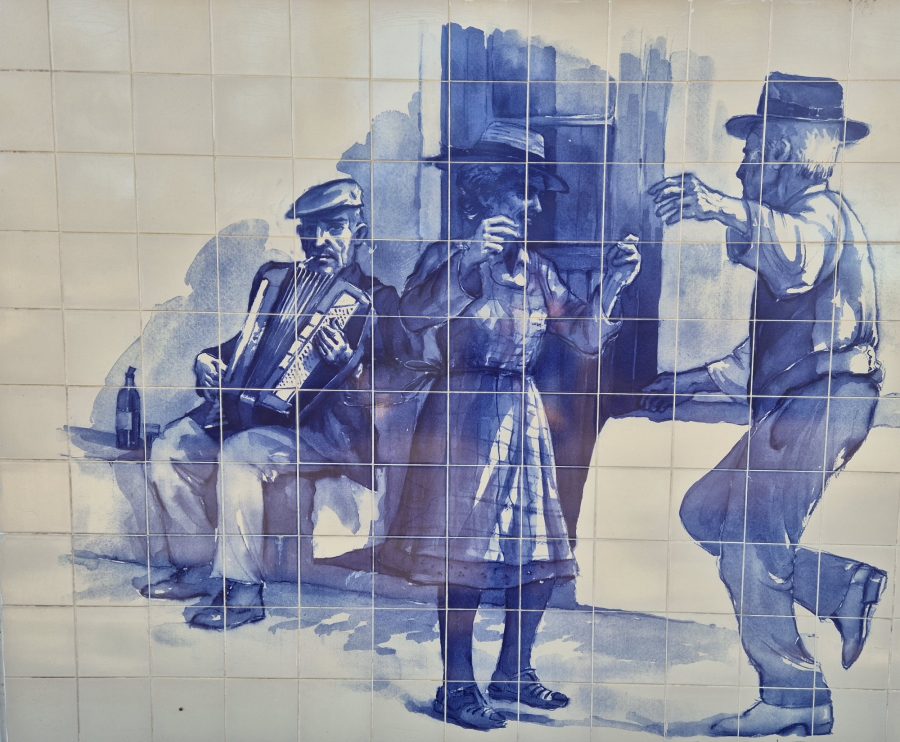
Our visit to Portugal was far too brief, but what a wonderful time we had. Thank you Karen and Henry for showing us your beautiful part of the world and tasting some of the local specialties.
Portugal merits months of exploring, so, we will definitely have to come back another time. But we must now get back to Mai Tai in Spain where our new stove has been delivered.
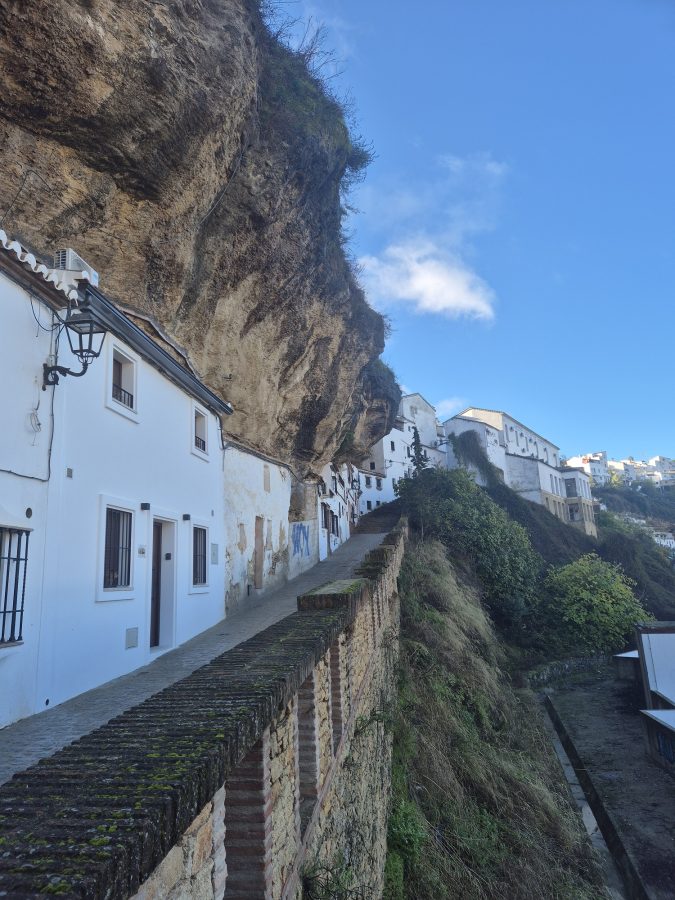
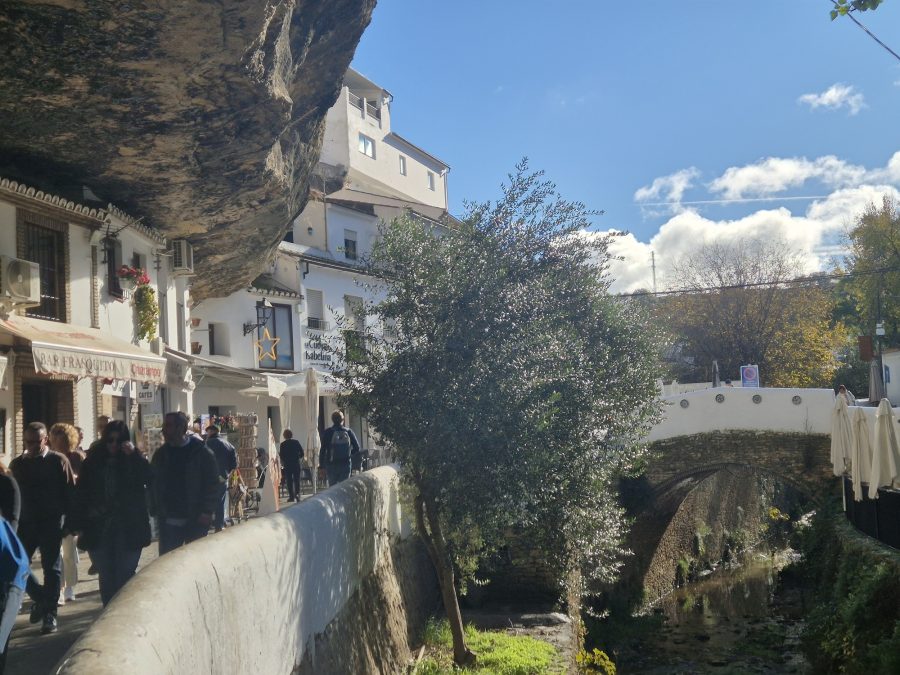
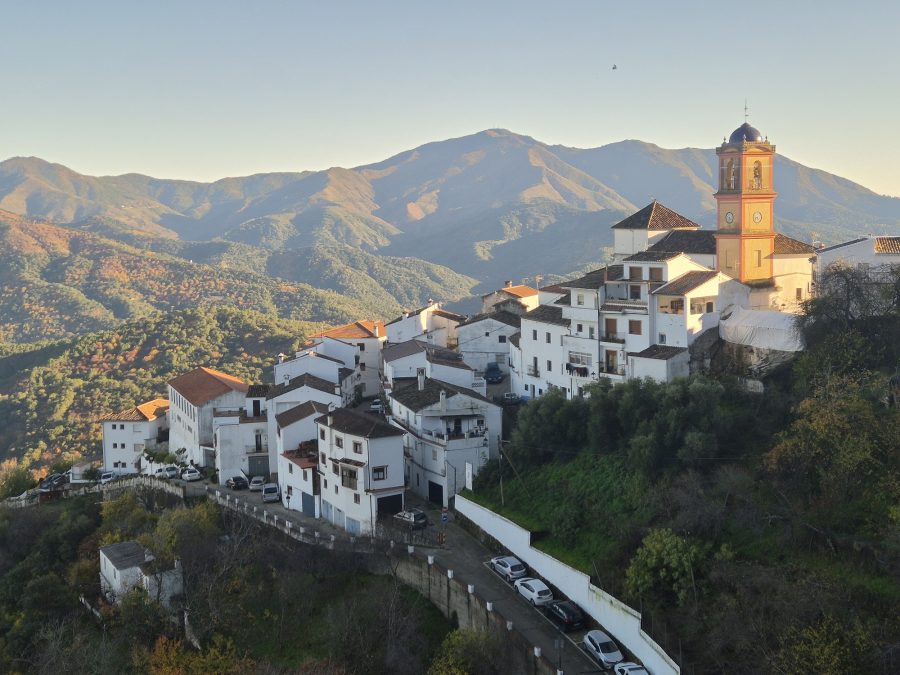
No sign yet of our batteries and solar panels, so we rented another car with some friends to drive up into the mountains to visit 2 very fascinating towns in the south of Spain, that had been on my bucket list.
Setenil de Bodegas is a unique town where the whitewashed houses are built into overhanging rocks, surrounding cliffs, along a river and beneath an old castle, once an Arab fortress.
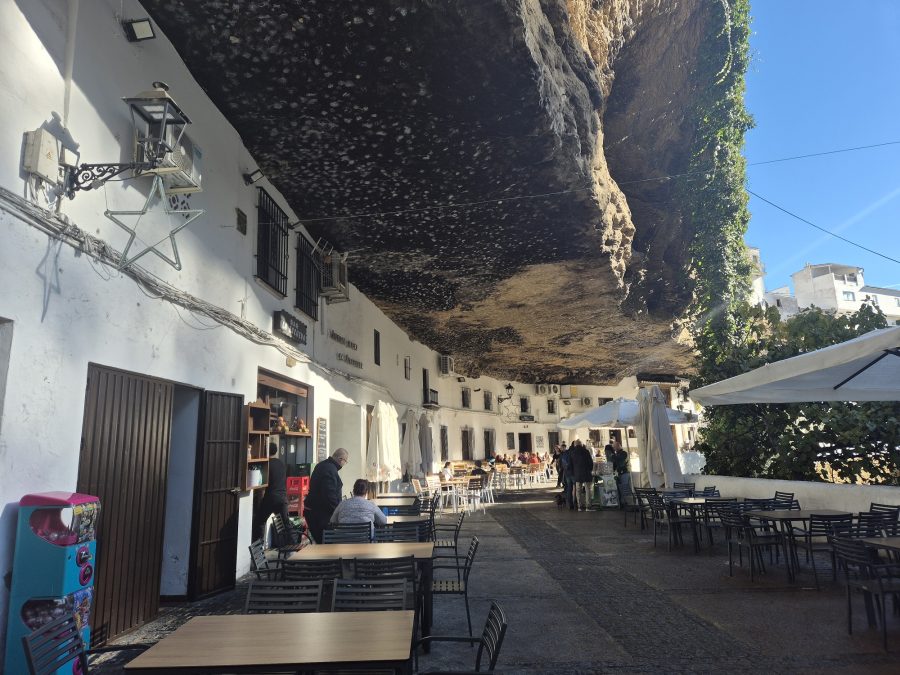
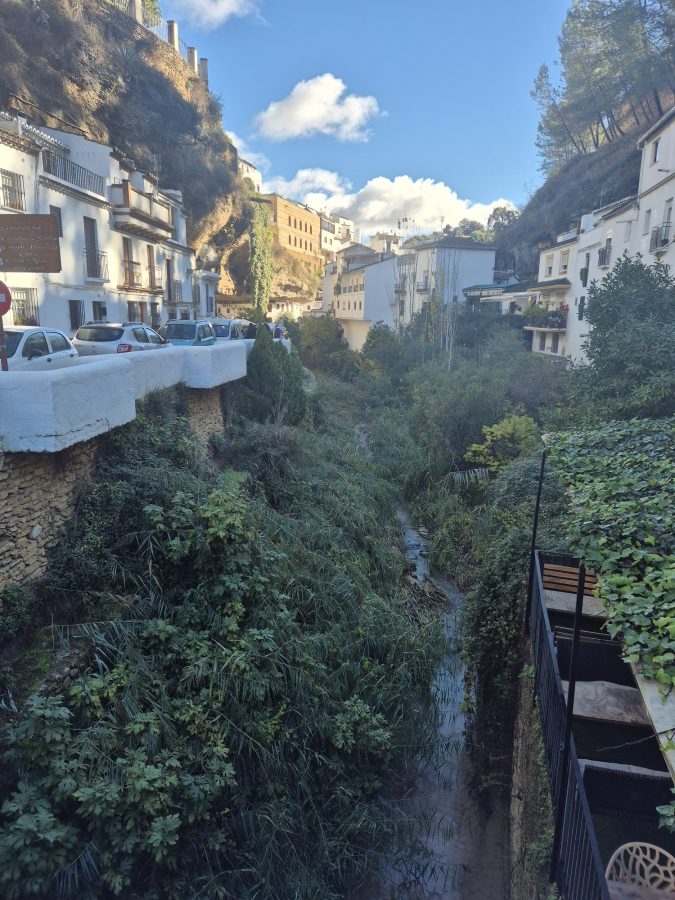
After a 40min drive south we entered the town of Ronda, one of the oldest towns in Spain that sits on top of a mountain plateau and made famous by the famous 18th century stone bridge that spans the 100 meter deep El Tajo gorge.
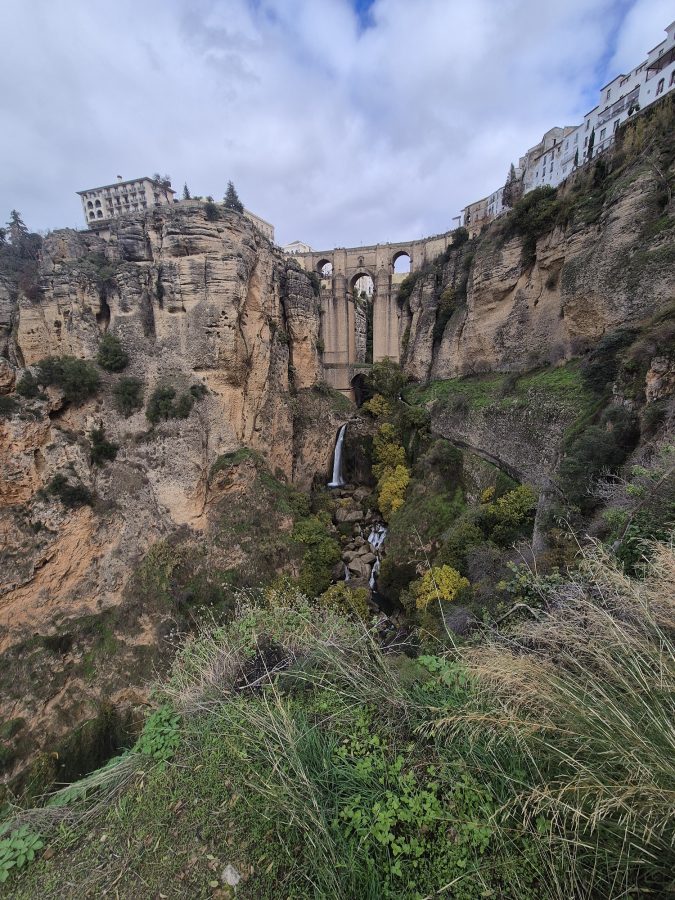
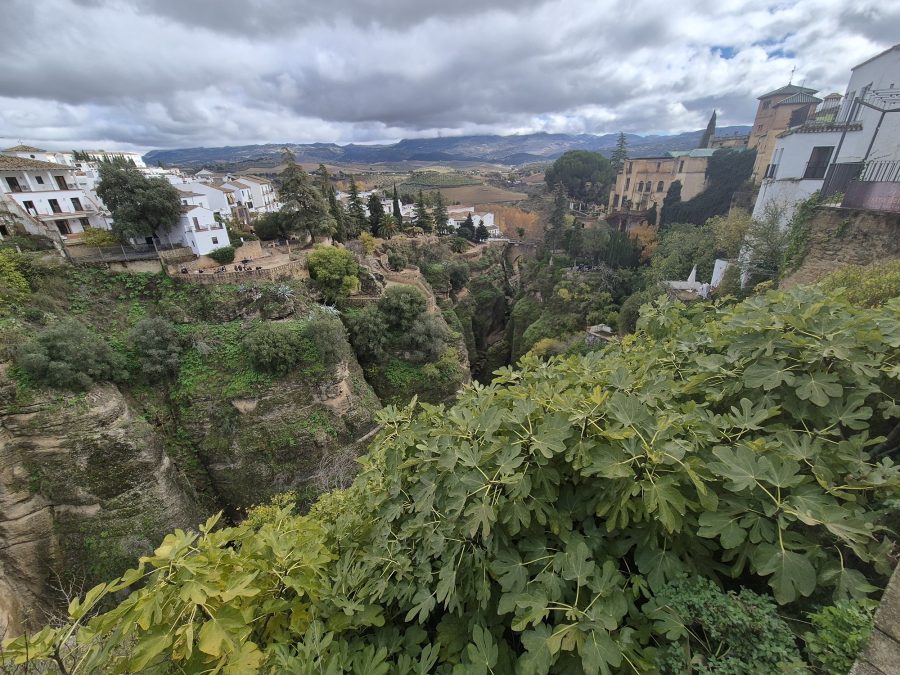
Ronda is also the spiritual capital of bull fighting and the bull ring, inaugurated in 1785, is one of Spain’s oldest and most iconic bullrings. It was not open to visit while we were there, but it was very impressive nonetheless and I wasn’t keen to see a bullfight.
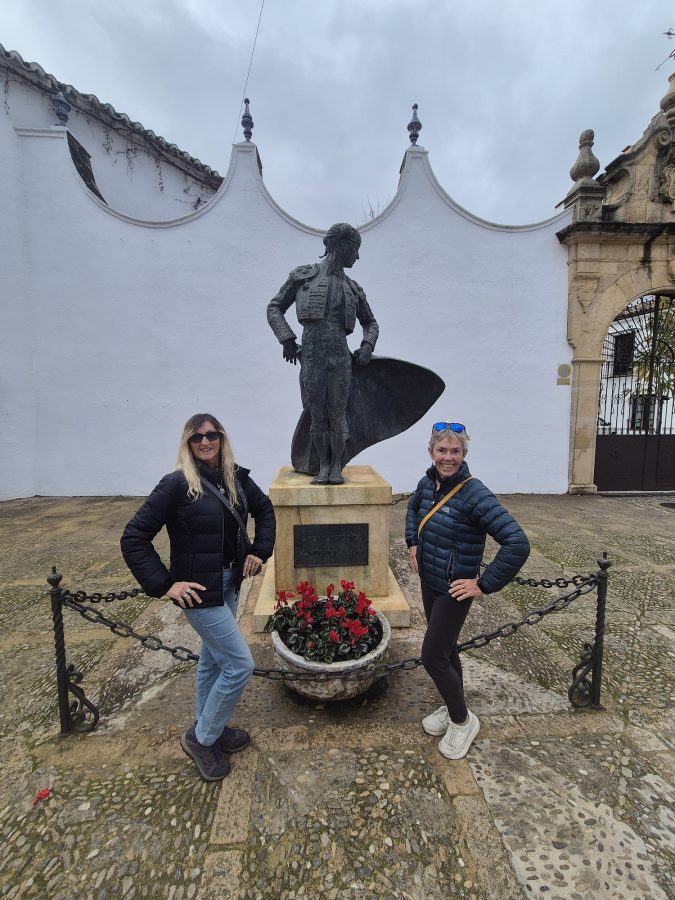
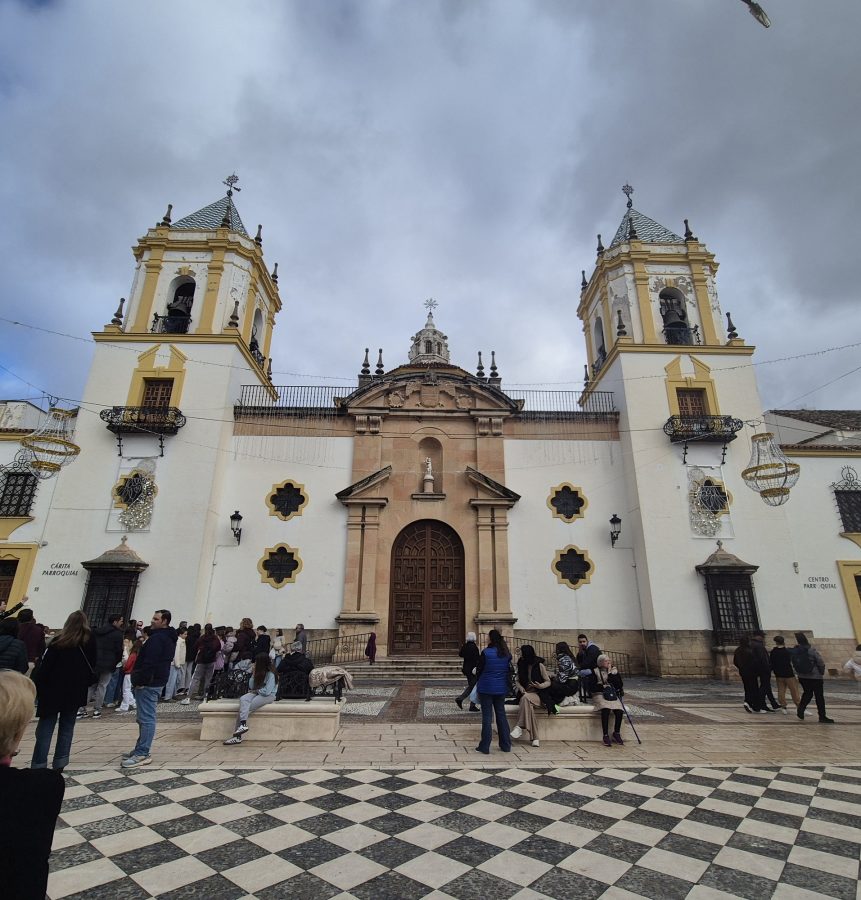
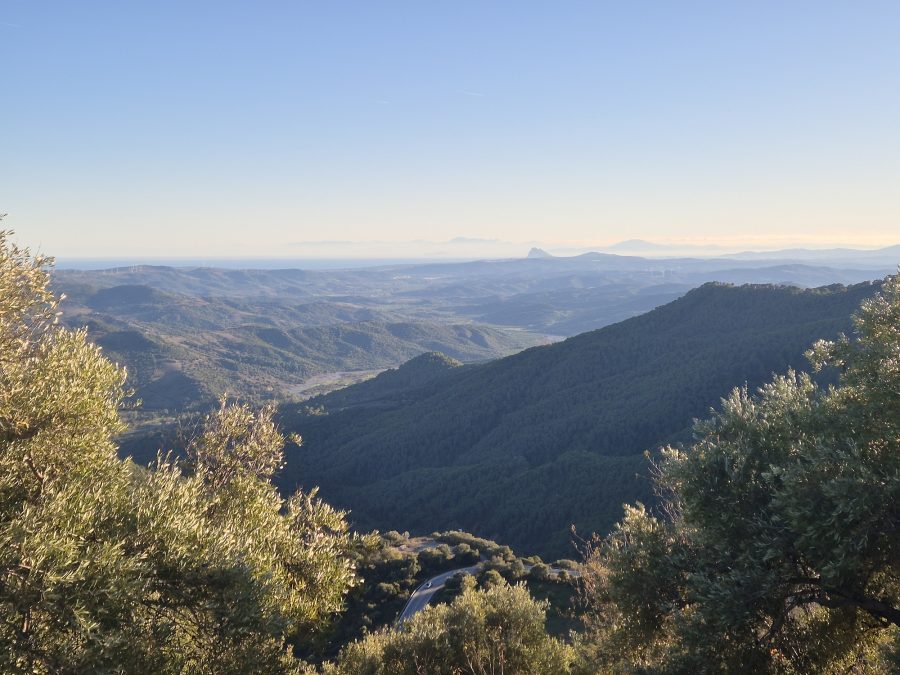
The drive back down to the coast, through the mountains, was spectacular.
Our solar panels and batteries eventually arrived, and Christmas was fast approaching. Once we leave here, our Atlantic crossing really begins. We still had jobs to do here, like repair our leaking dinghy, as we knew we could find the special glue for our Hyperlon dinghy, but we do need to get out of Spain as it is one of the Schengen countries and our 90 days of Schengen is fast running out. The Canary Islands are also part of the EU, therefore also Schengen, so we need to save some time to visit those islands. We did manage to cruise Sicily and Sardinia “in transit”, so our 90 days Schengen time has only been counting from Palma de Mallorca. We now have 3 weeks left.
It was New Years Day when we finally got the perfect weather window to set sail for Tangiers, in Morocco, just 35nms away. We were crossing the Straits of Gibraltar which are notorious for not only very strong tidal currents but also for Orcas attacking the rudders of sail boats. They have indeed severely damaged some yachts and even sunk a few, but recently there have been hardly any sightings, so we felt confident, but always on the lookout nevertheless.
We arrived safely in Tangiers, Morocco. The customs clearance into the country went smoothly, and we were soon shown our berth in the marina. There is no anchoring allowed out in the bay, but we were very happy to be here so we could go exploring this new country. I was here 50 years ago, on a camping expedition, so it will be interesting to see how it feels nowadays.
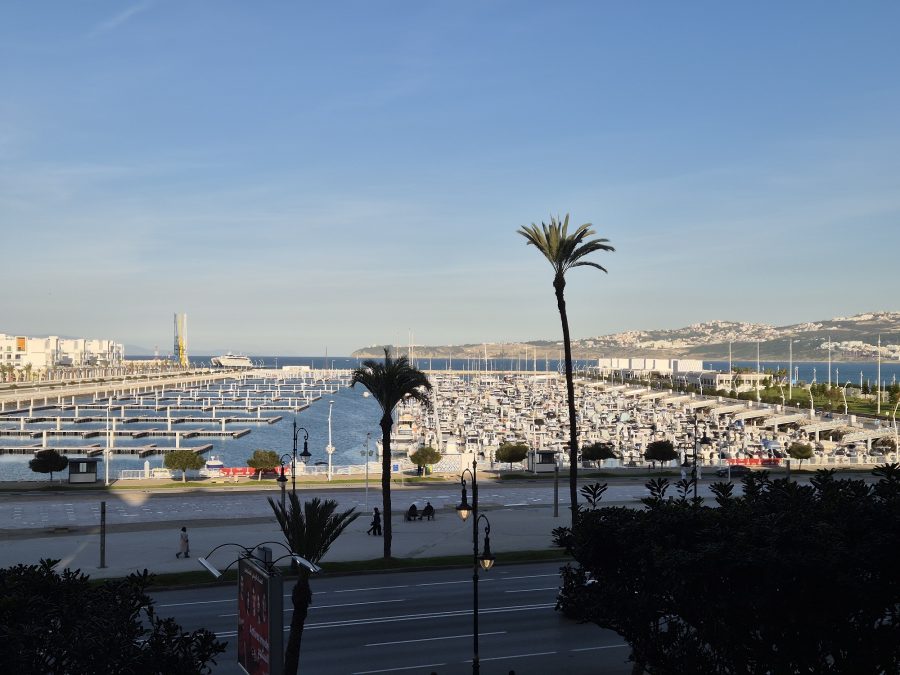
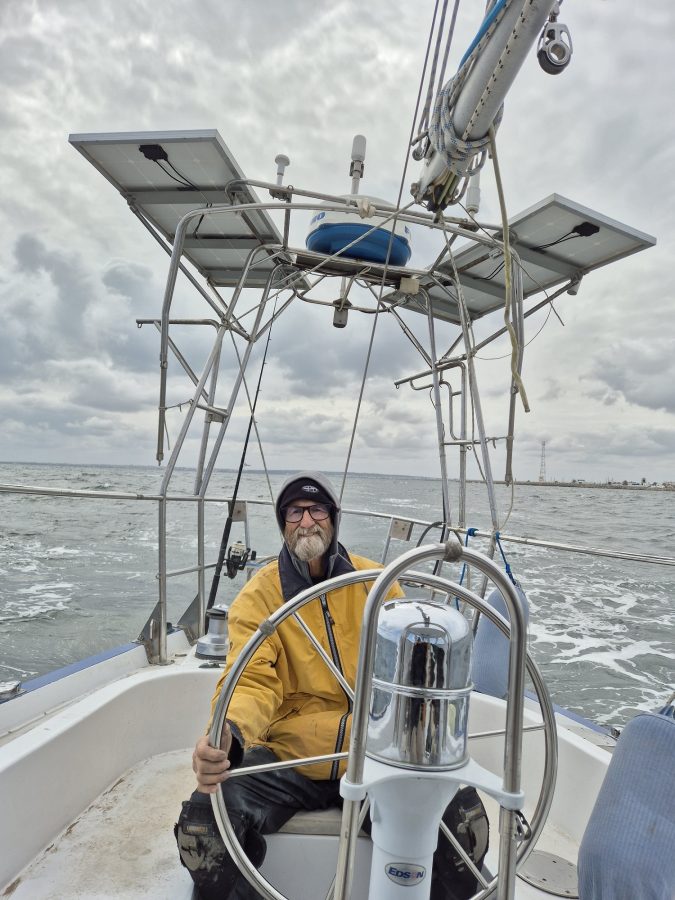
Supermarkets are within walking distance as are the local Medina and market. It was very easy to fall in love with this place, plus meeting up with our friends.
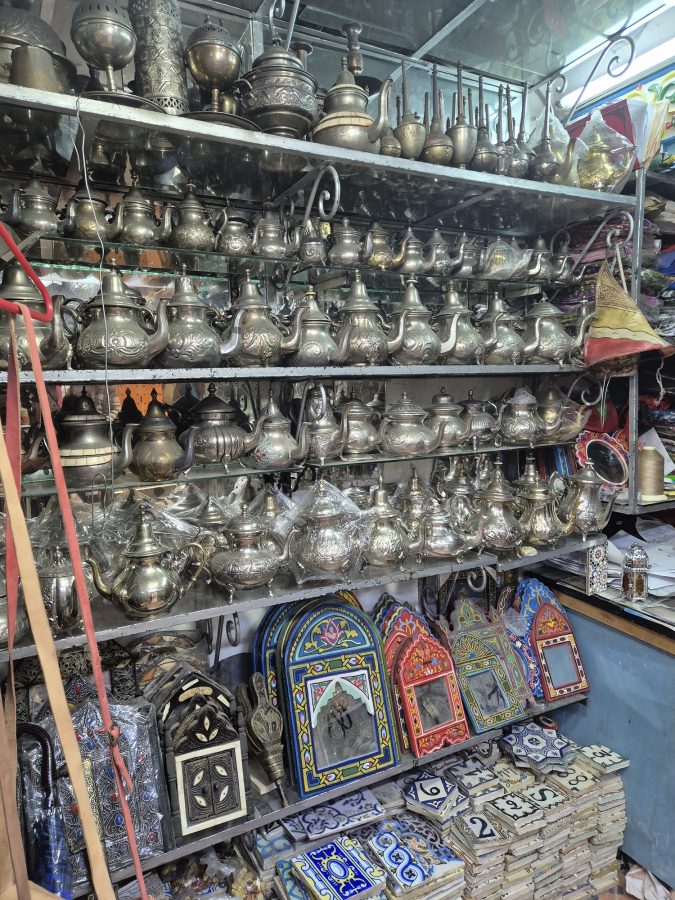
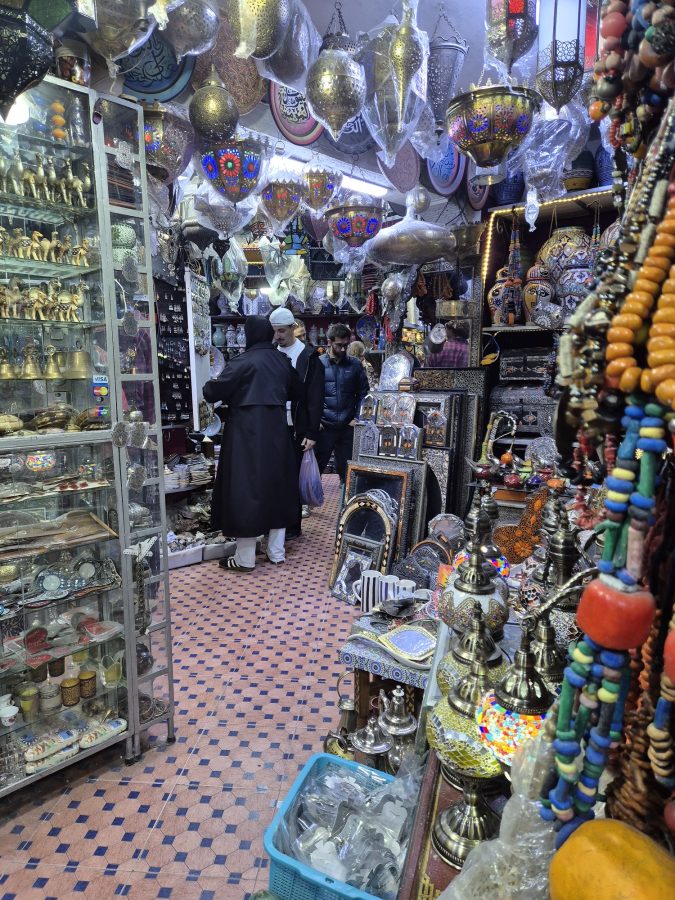
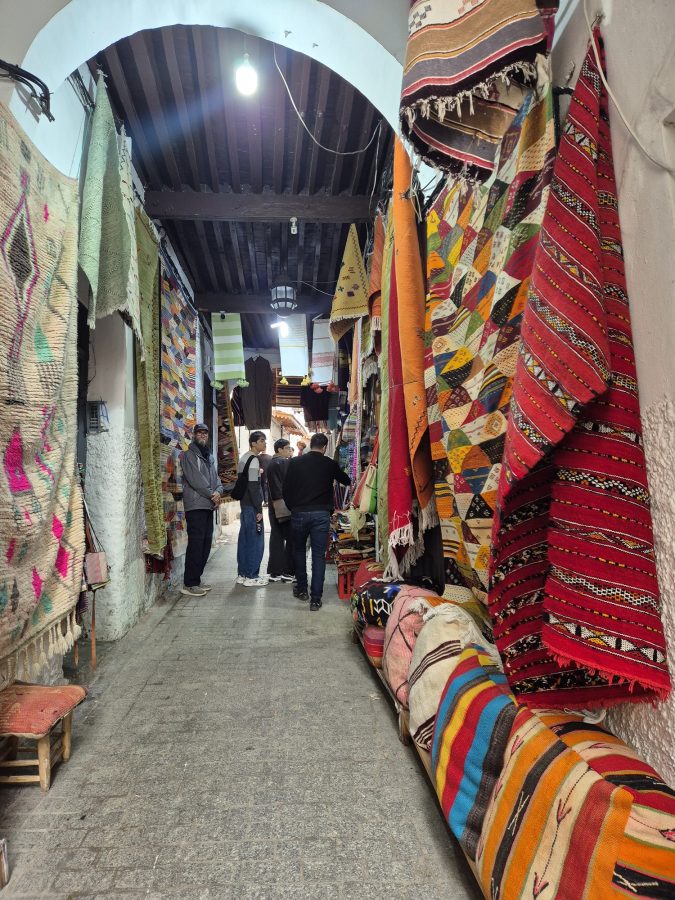
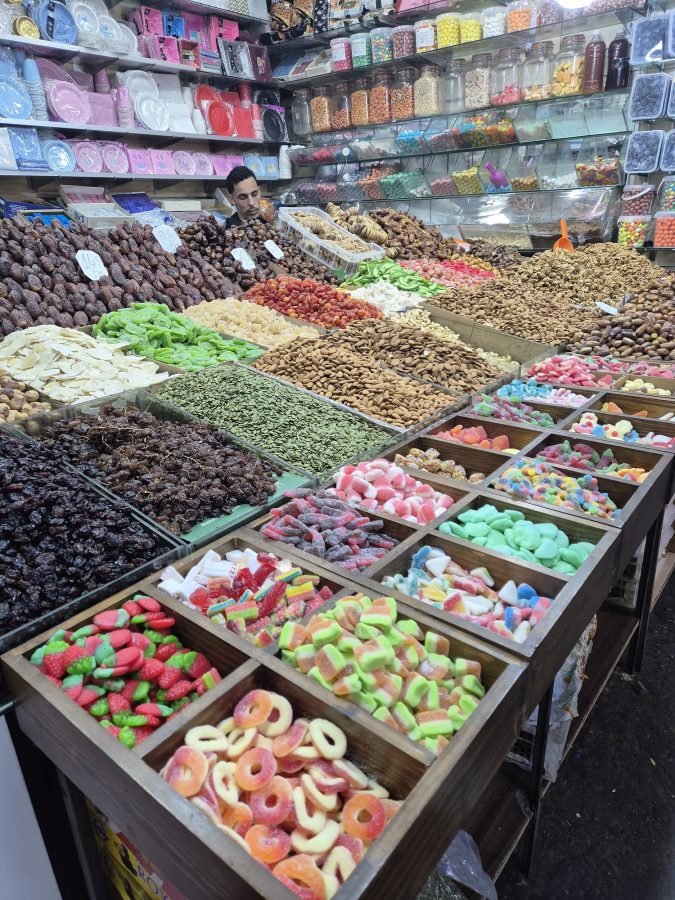
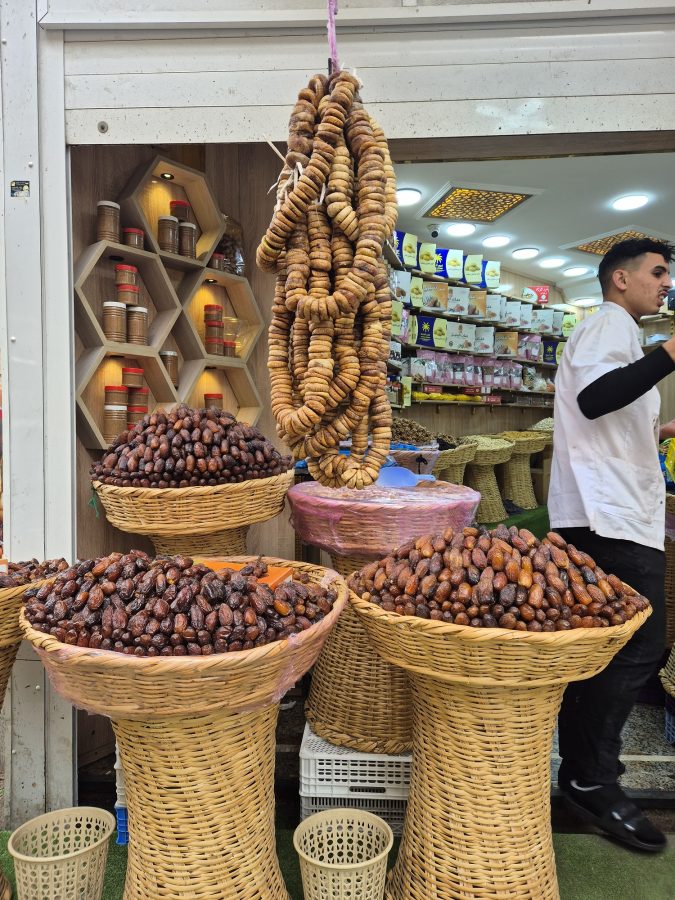
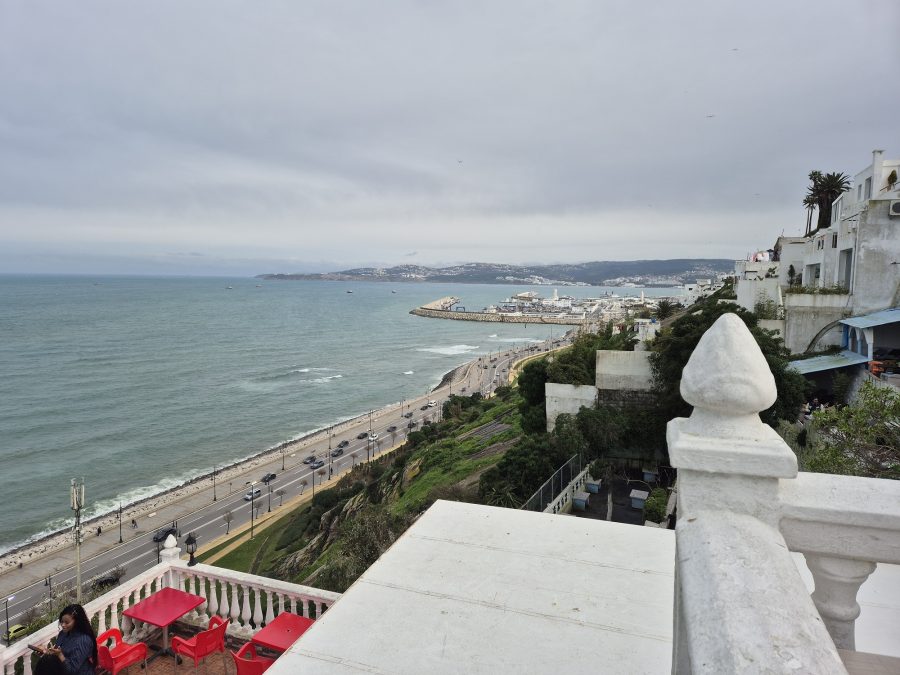
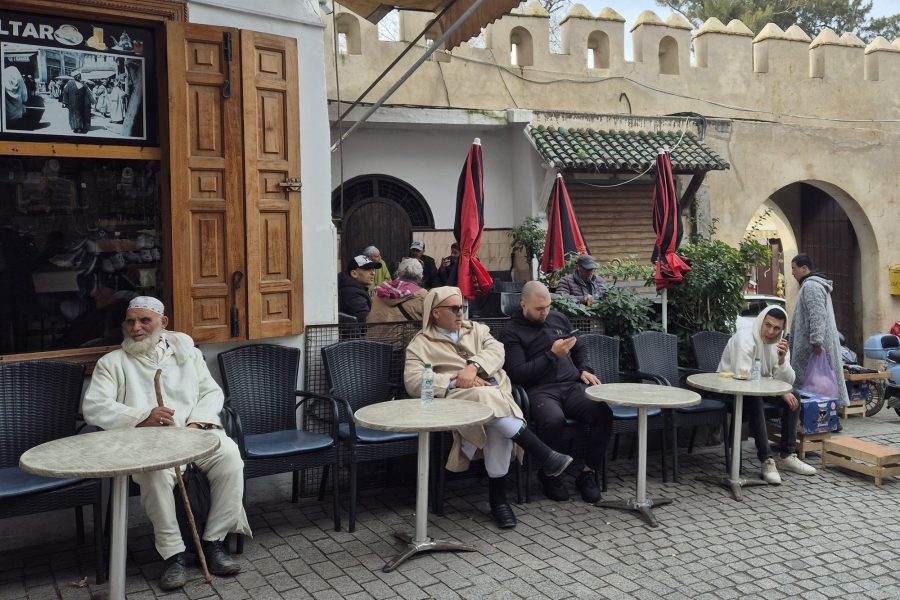
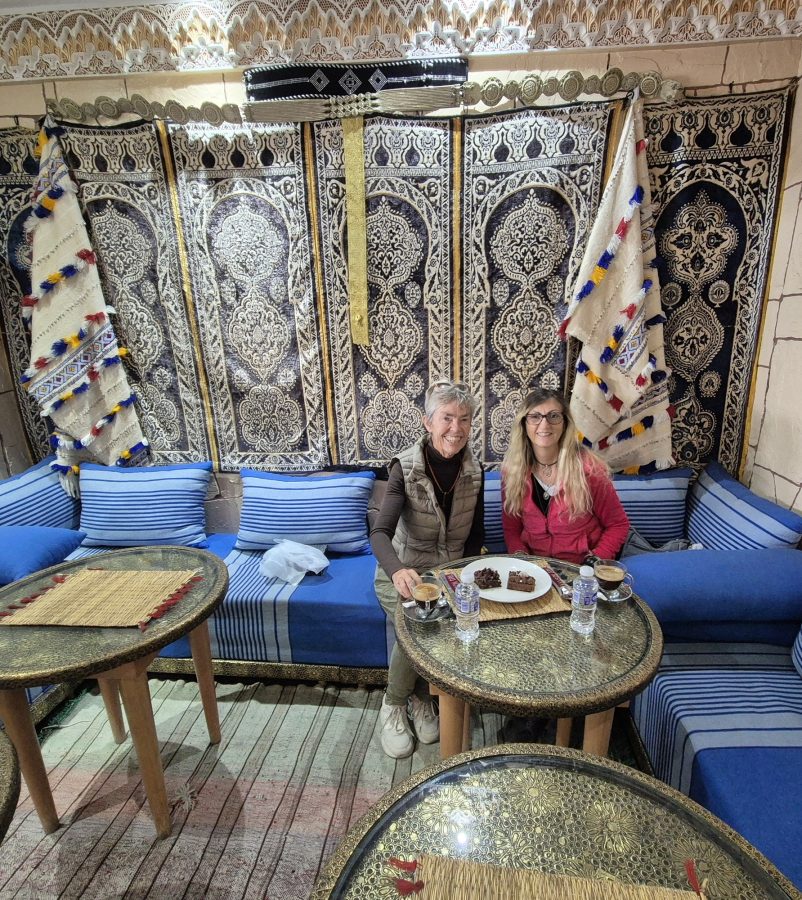
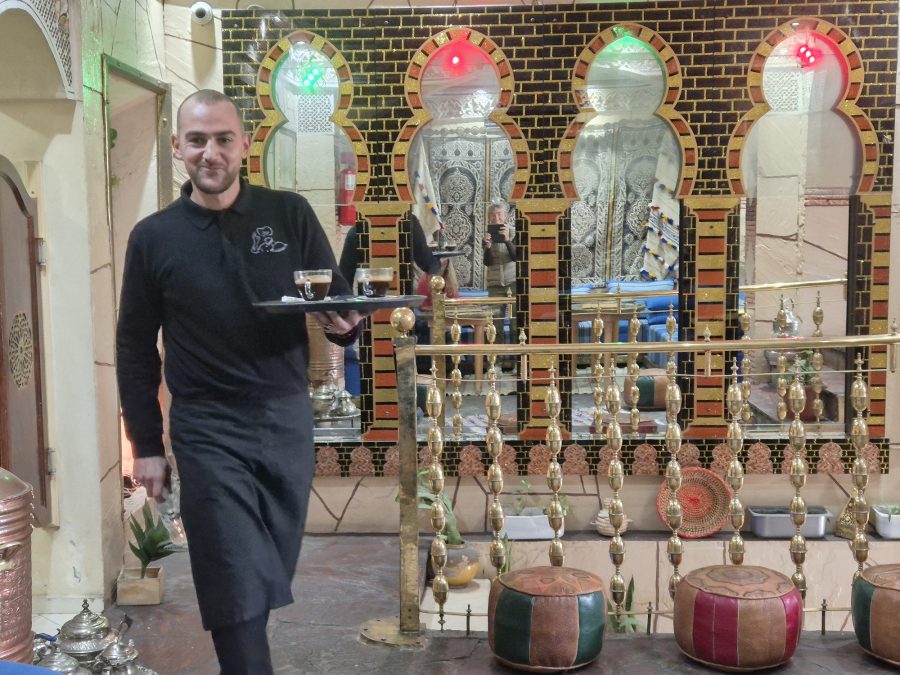
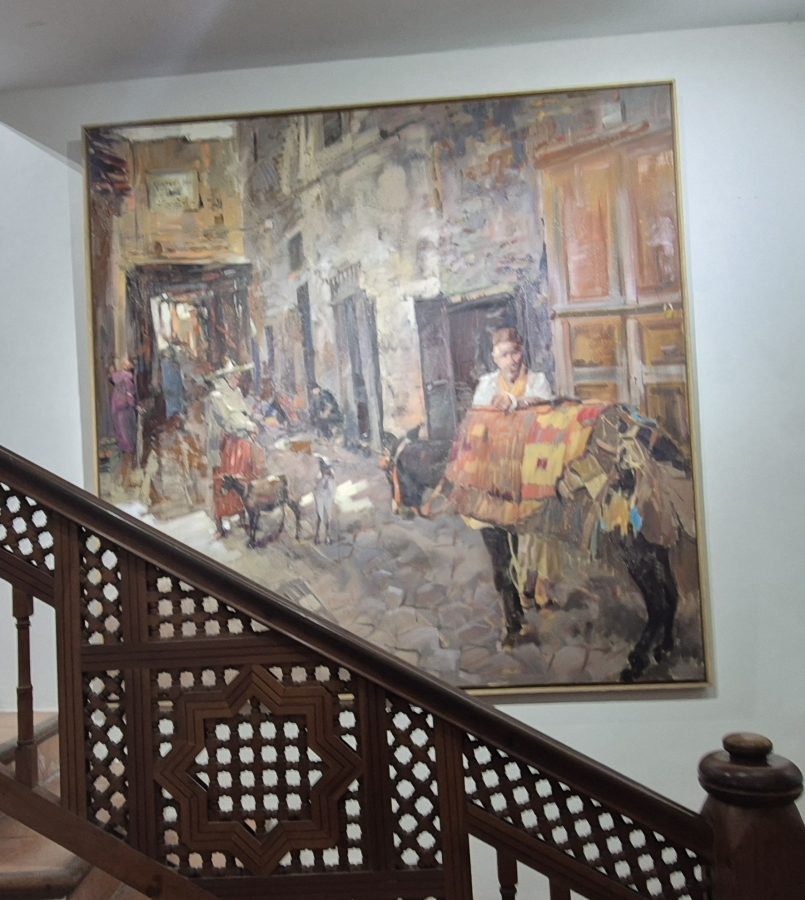
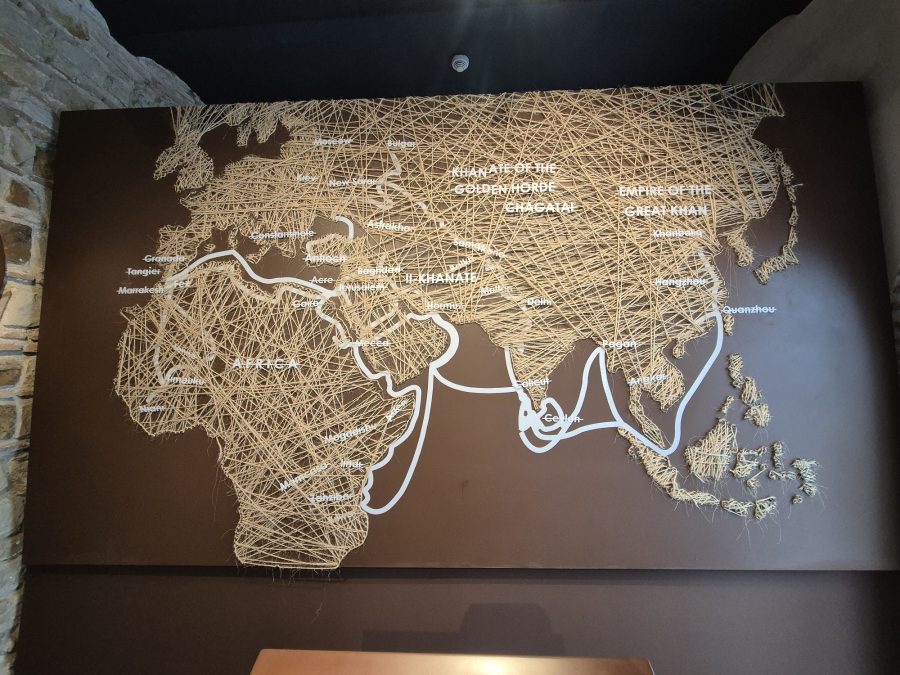
When visiting the Ibn Battuta Museum, I was fascinated to learn about a Moroccan explorer, born in Tangiers in 1304, who travelled for 30 years covering over 40 countries, exceeding the distance travelled by Marco Polo. He began his travels at the age of 21yrs on a Hajj pilgrimage to Mecca. He documented his journeys in a book called the Rihla or A Gift to Those Who Contemplate the Wonders of Cities and the Marvels of Travelling. International travellers will land at Tangier Ibn Battuta Airport and there is a shopping mall in Dubai named after him.
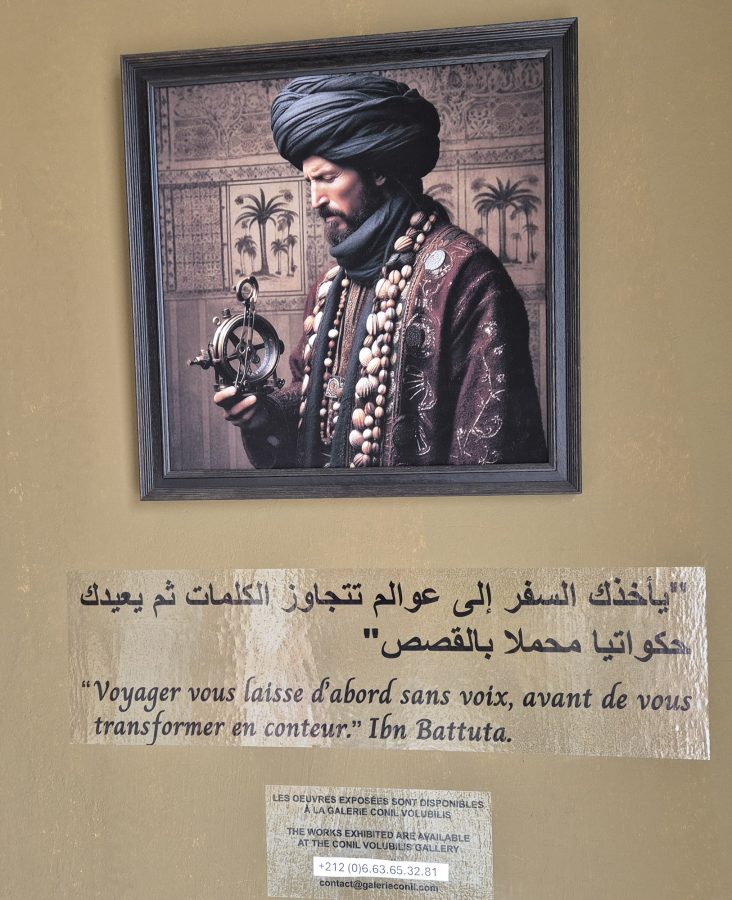
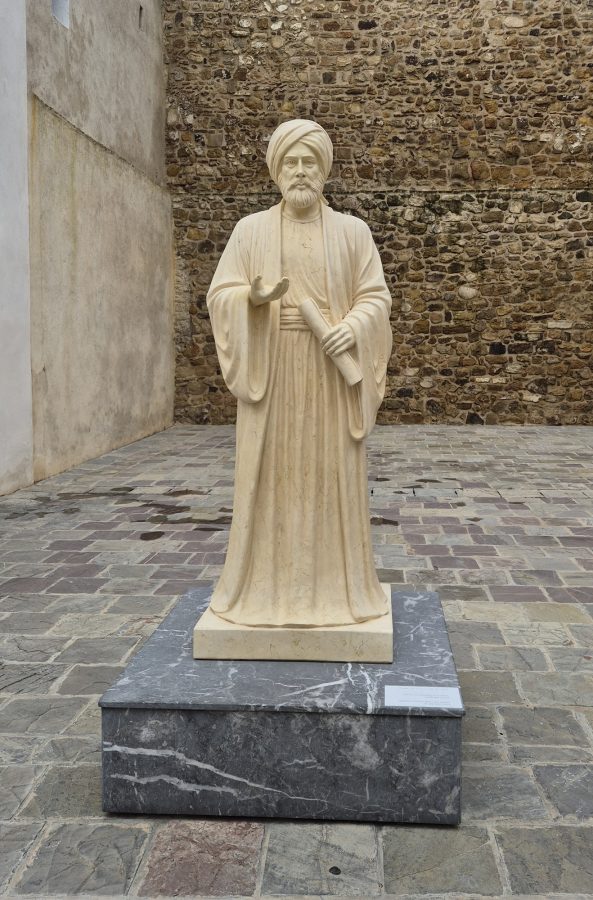
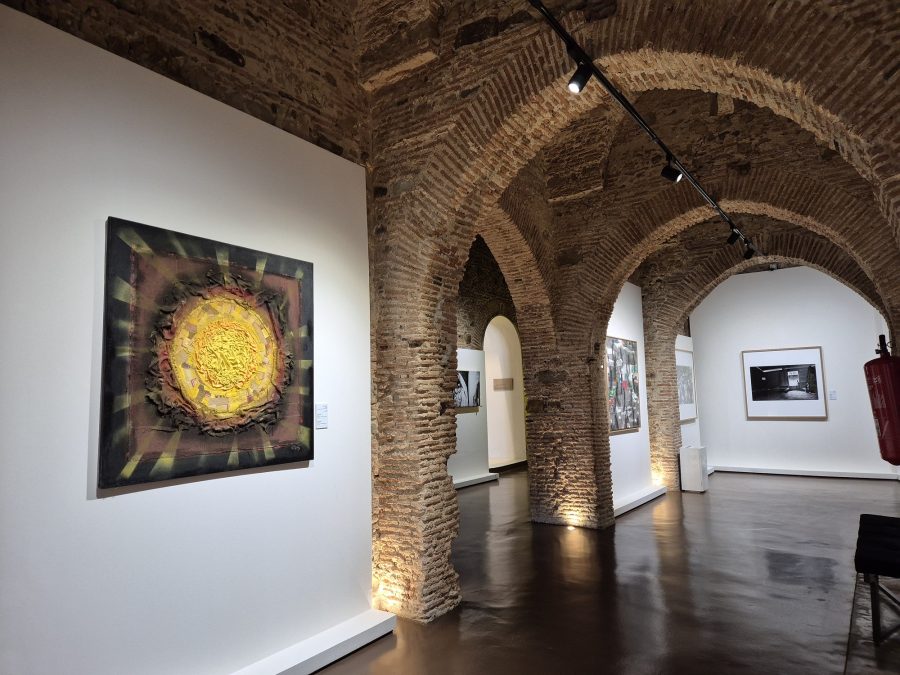
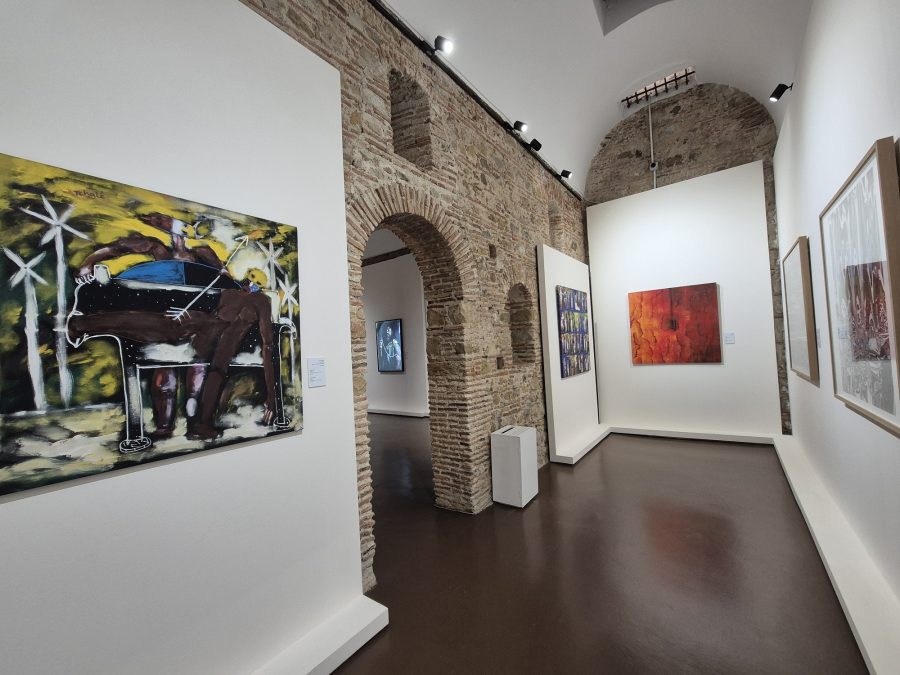
The contemporary art gallery had an exhibition of artists from 50 different African countries, beautifully displayed in the building of the former British consulate. Also, street art adorns many wall spaces.
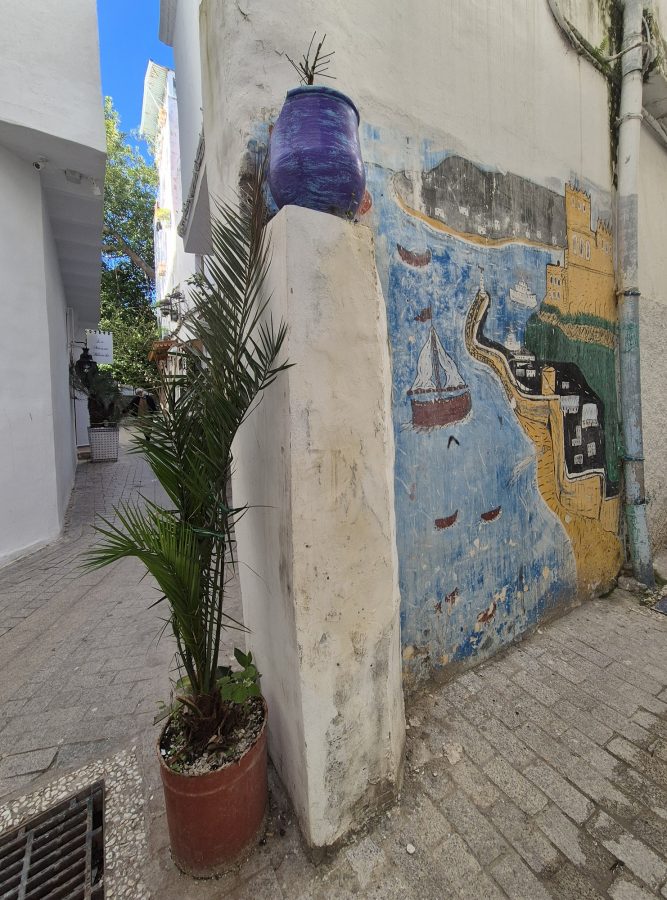
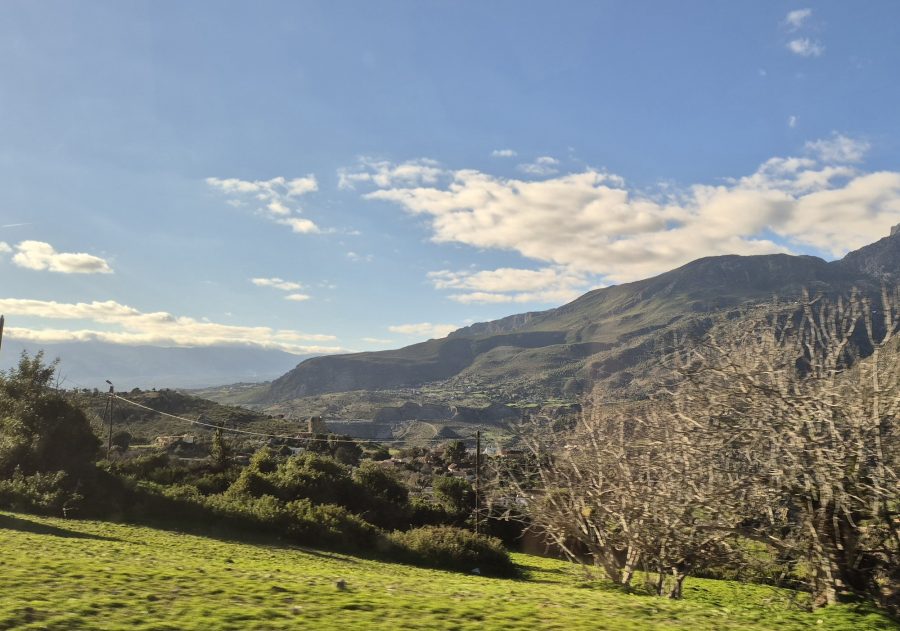
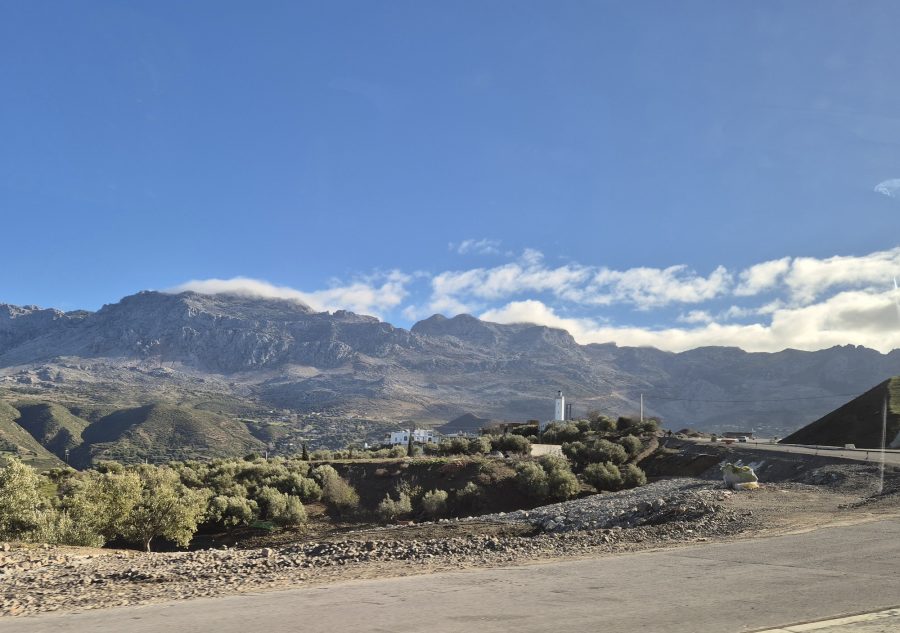
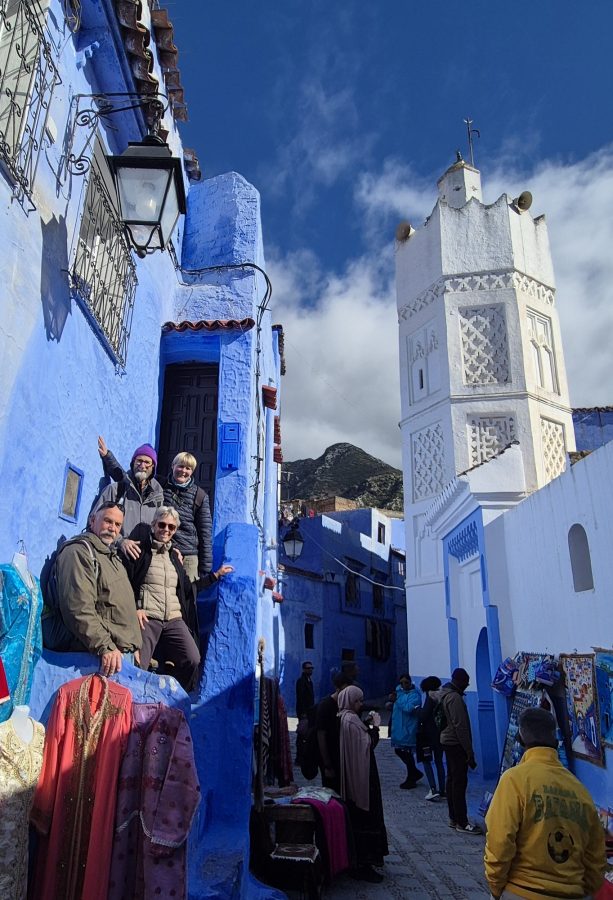
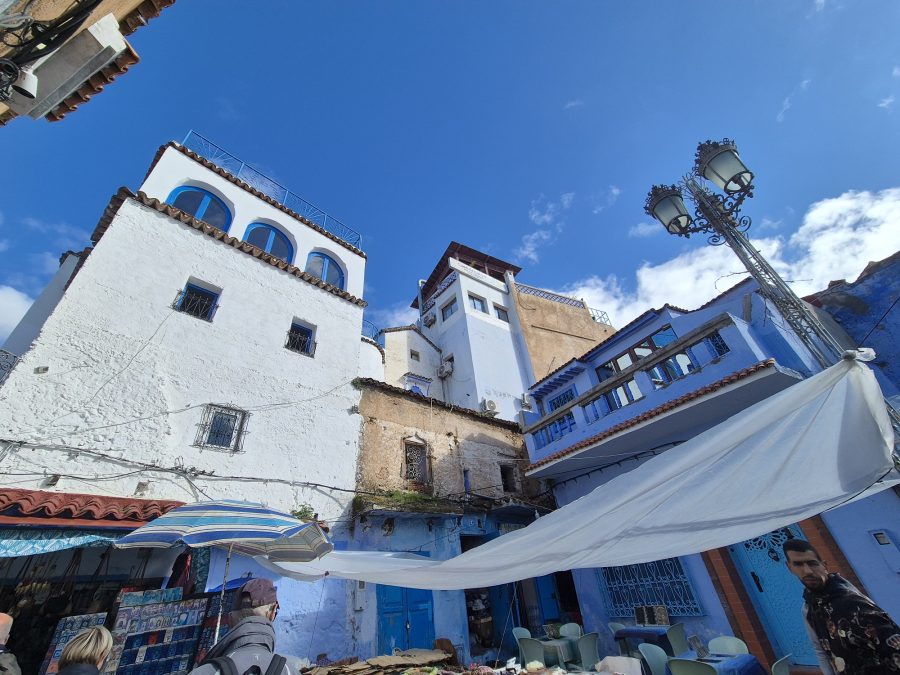
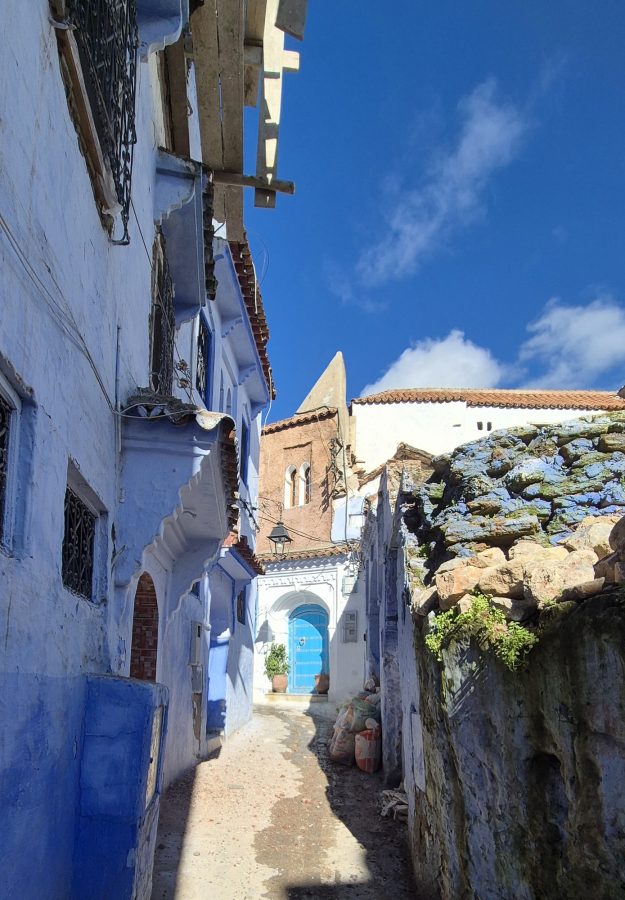
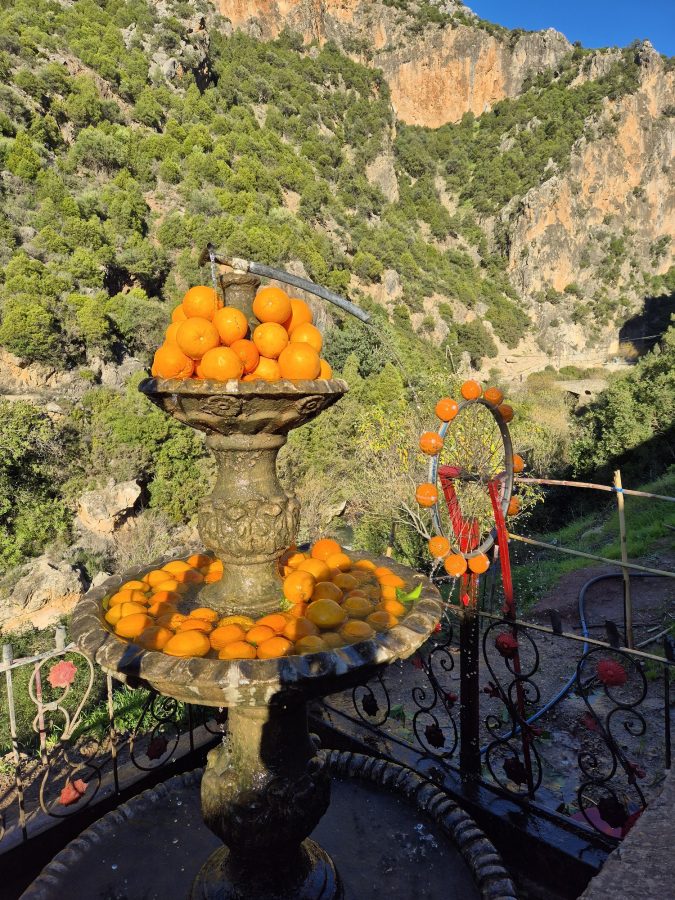
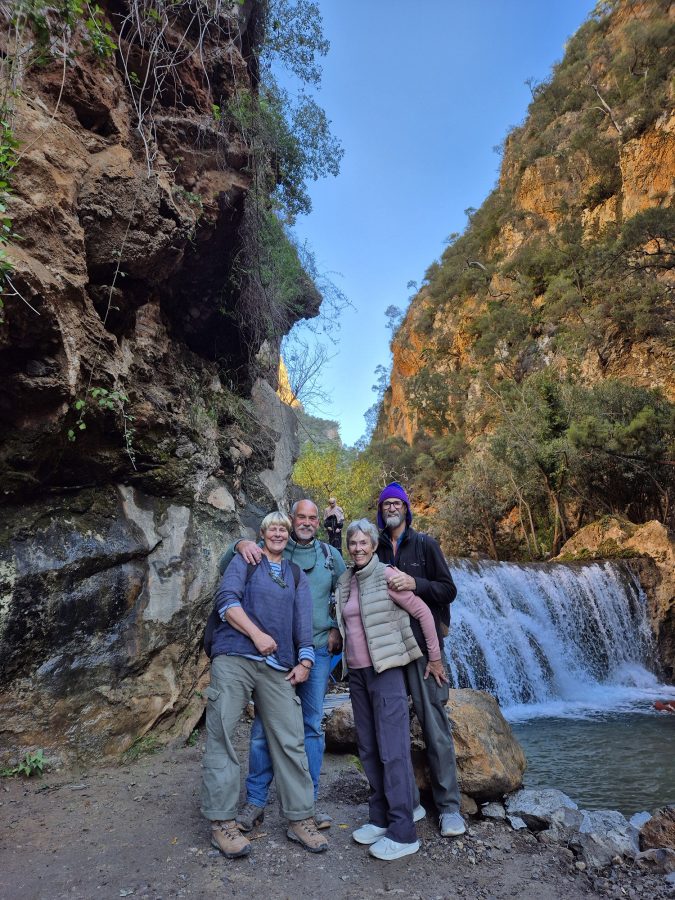
Another day trip from here was a visit to Chefchouan, a city up in the Rif Mountains, known for its blue-washed buildings, beautiful cobbled streets and a 15th century Kasbah. We joined our friends Dirk and Christine for a fun day exploring together., then hiked up to the Akchour Waterfalls.
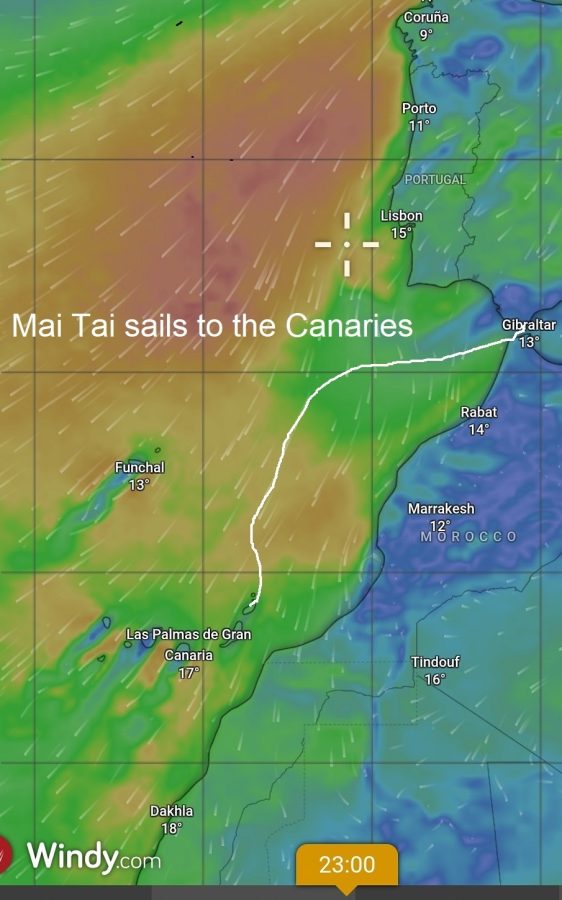
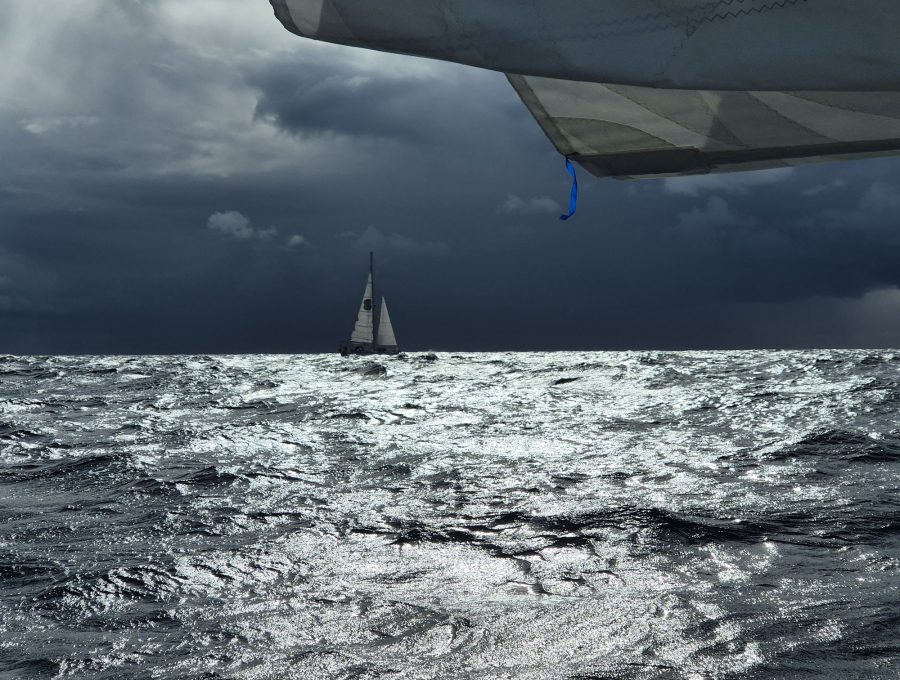
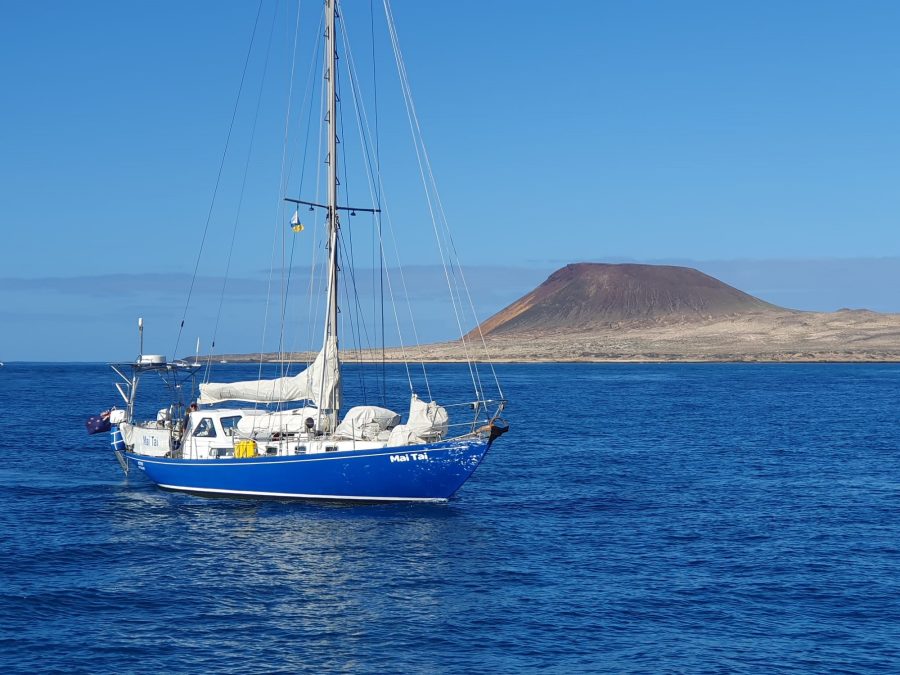
We were several boats waiting in Tangier for the right weather window to set sail for the Canary Islands, 580 nms away. This stretch of water can get very rough with strong winds, and strong currents, so we wanted to wait for the best conditions possible. We set off with 3 of our friends and planned to meet up at our chosen anchorage in La Graciosa, in the Canary Islands in 5 days’ time. We all have Starlink installed these days, so it is fun to be able to communicate during a passage. We did have a lot of fun comparing our sailing conditions especially with our friends on their catamarans. But we ended up winning the race with Mai Tai as she glided through the waves with ease.
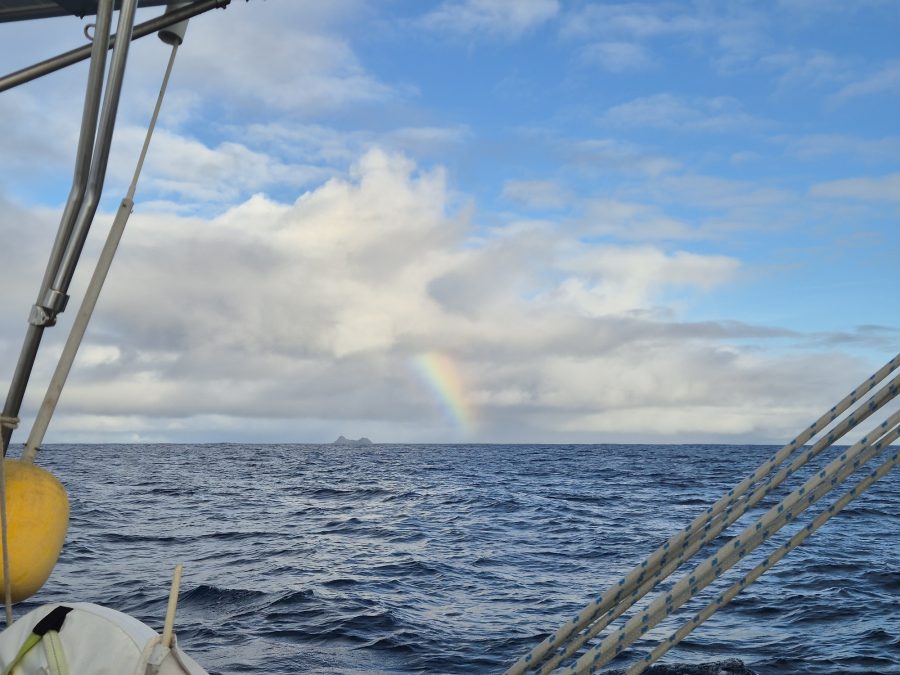
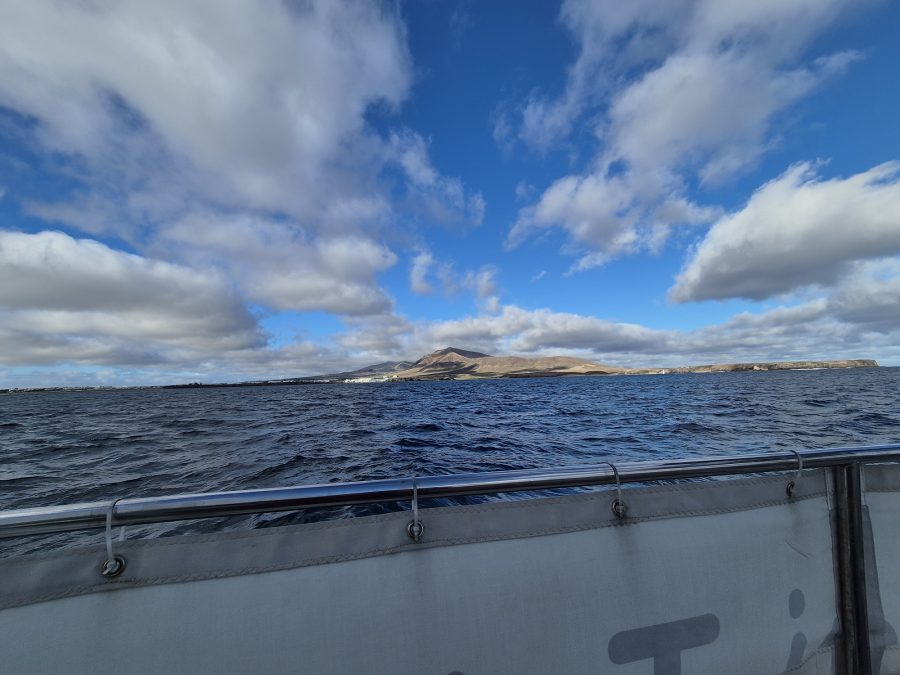
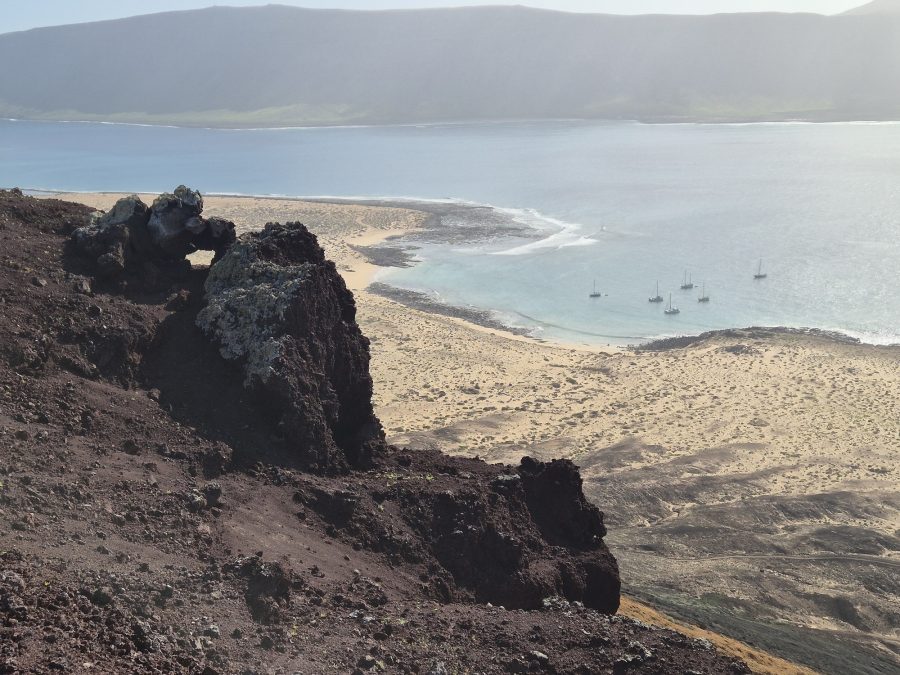
La Graciosa is a volcanic island, one of the 7 Canary Islands and with 2 impressive volcanic peaks. There are no paved roads, only hiking and bike trails and a very secure anchorage.
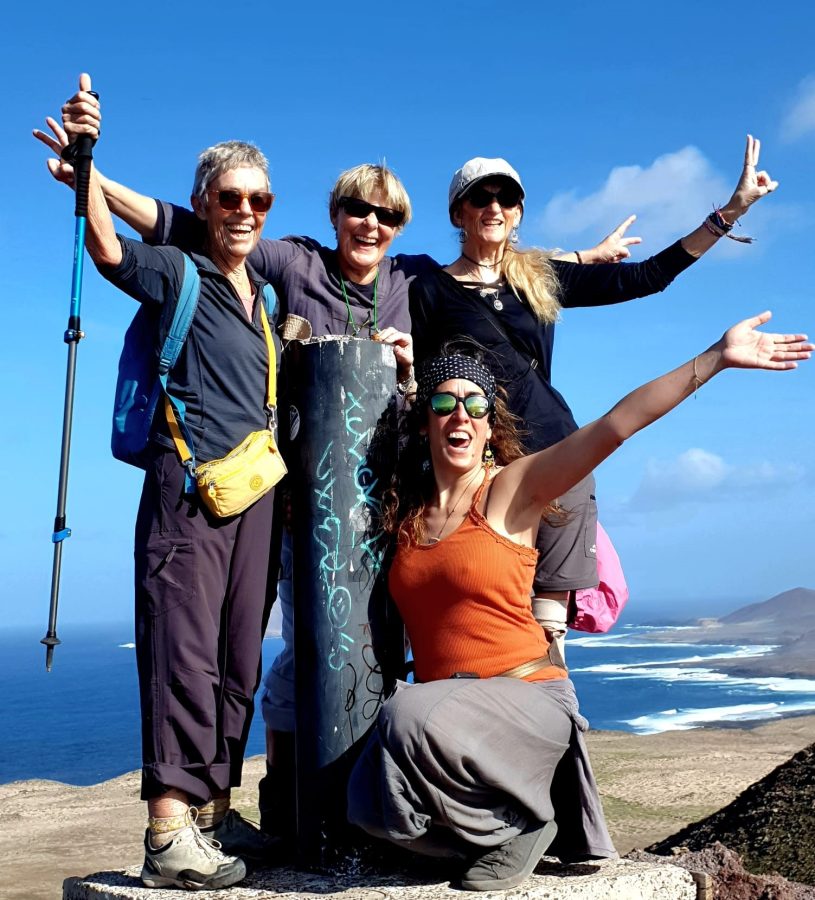
We couldnt wait to go ashore to climb our mountain. It was deceivingly steep, but we made it to admire our boats at anchor below.
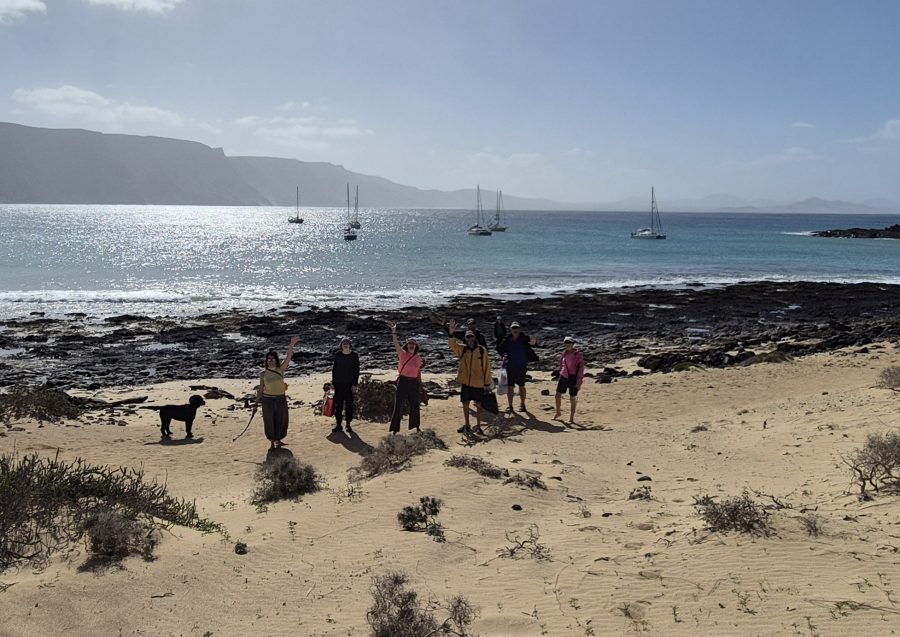
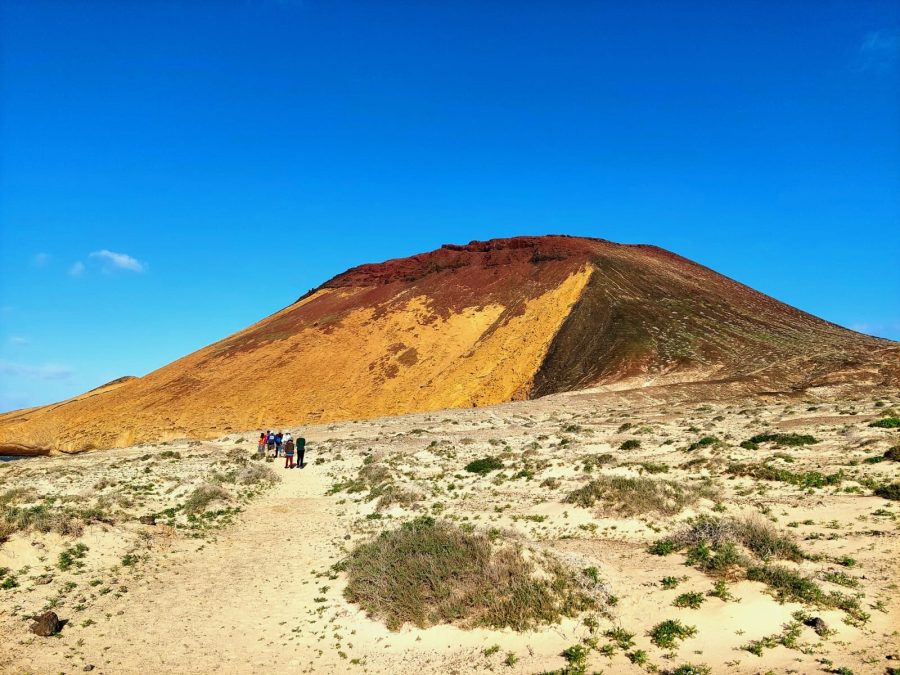
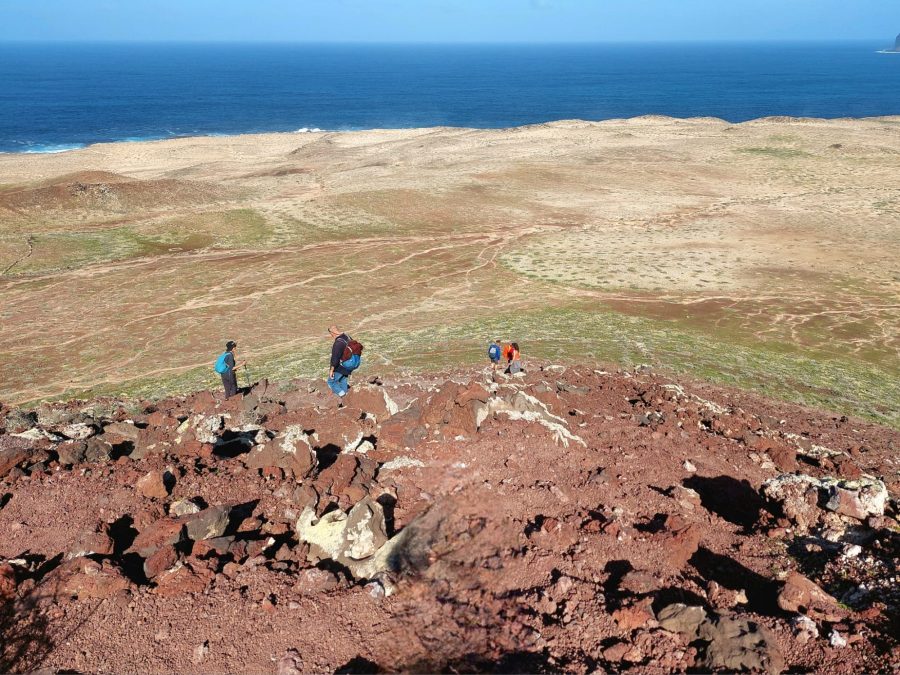
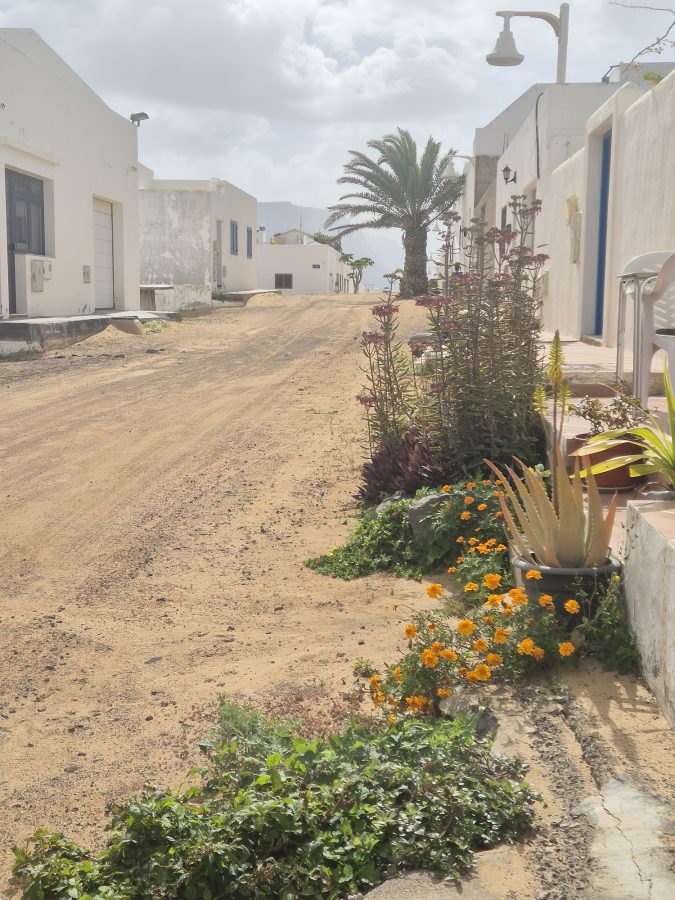
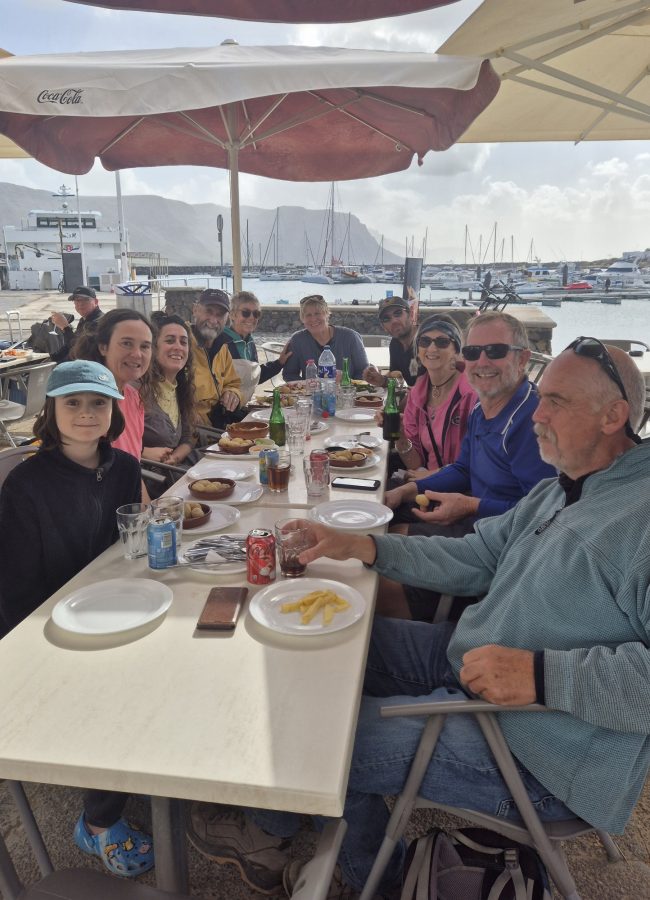
The town was very quiet but served a delicious lunch. A few tourists come over by ferry from Lanzarotte to explore island by rental bike or hike a volcano.
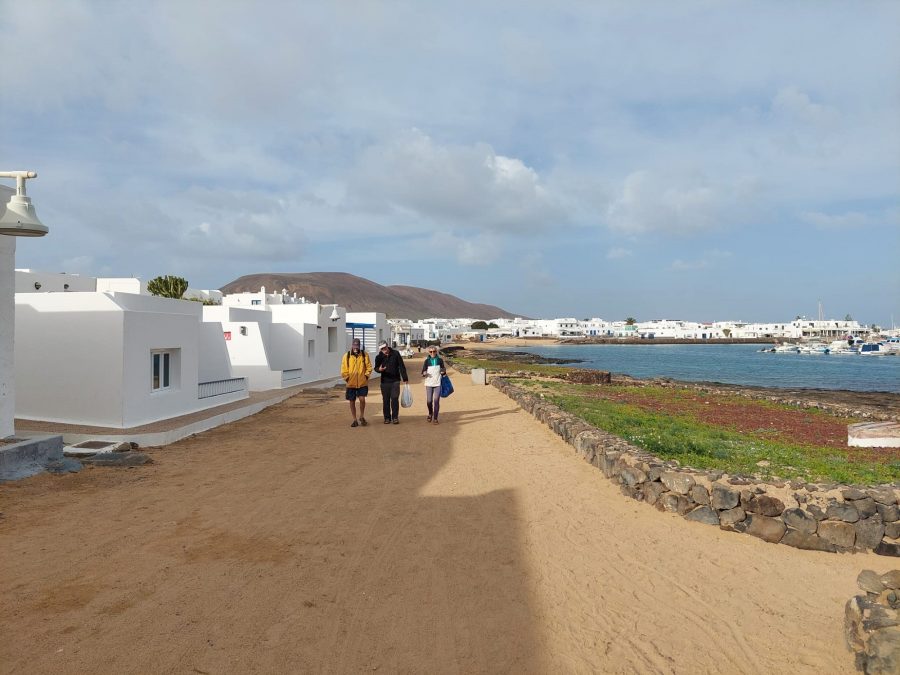
After a few days in la Graciosa, we stopped with our friends in Lanzarotte, before sailing a further 120 nms down to Las Palmas on Gran Canaria.
After a great sail, we turned on the engine to enter the busy harbour but we were barely around the corner when our engine just died. Oh dear. Here we go again! Ships were coming and going all around us, and we had already put all our sails away, so we decided to fall back on our emergency plan to launch our dinghy and tow ourselves into the anchorage. We are getting quite good at this now.
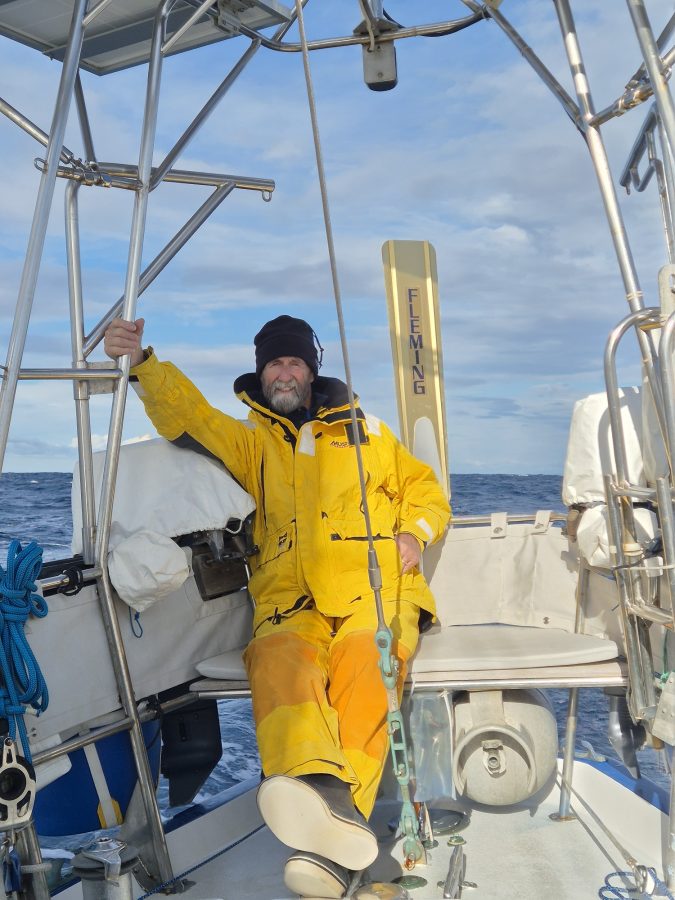
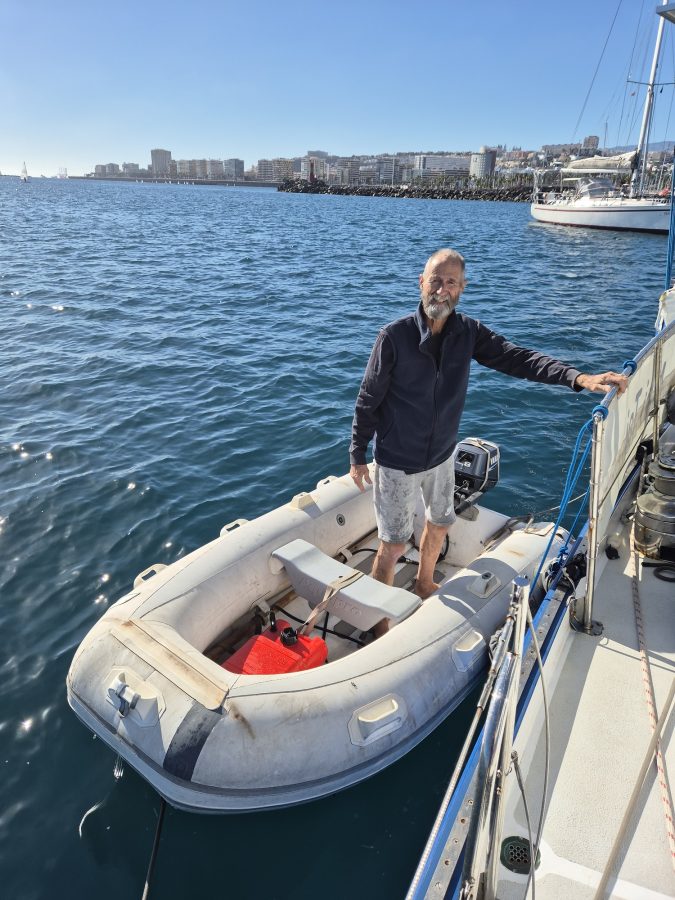
The shock came when Lane found our diesel tank was completely empty.!!! Urgent repairs were needed to find the cause of the fuel leak, so we arranged for a place in the marina and towed ourselves in. Phew. Many cruisers come through here before crossing the Atlantic, so the chandeleries are well stocked with all sorts of boat bits ready for all those repair jobs.
Another exotic place. More repairs. But with the help of one of our friends, Jon, Lane did manage to find the problem and together they bled the air out of the system and were able to get the engine running again. And repair the cause of the leak. What a huge job.
But it was carnival time and the town was out to celebrate


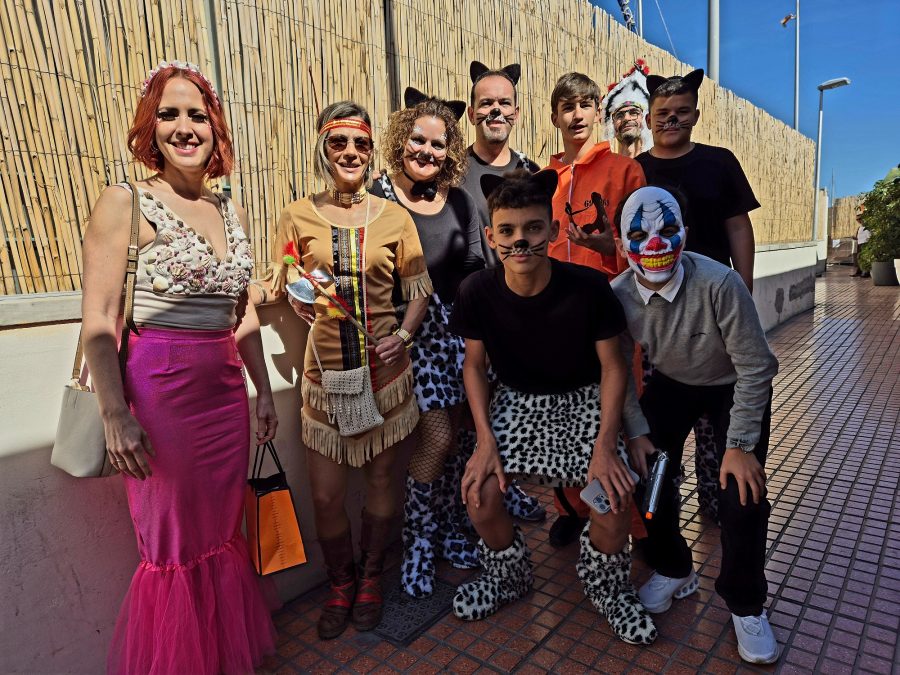
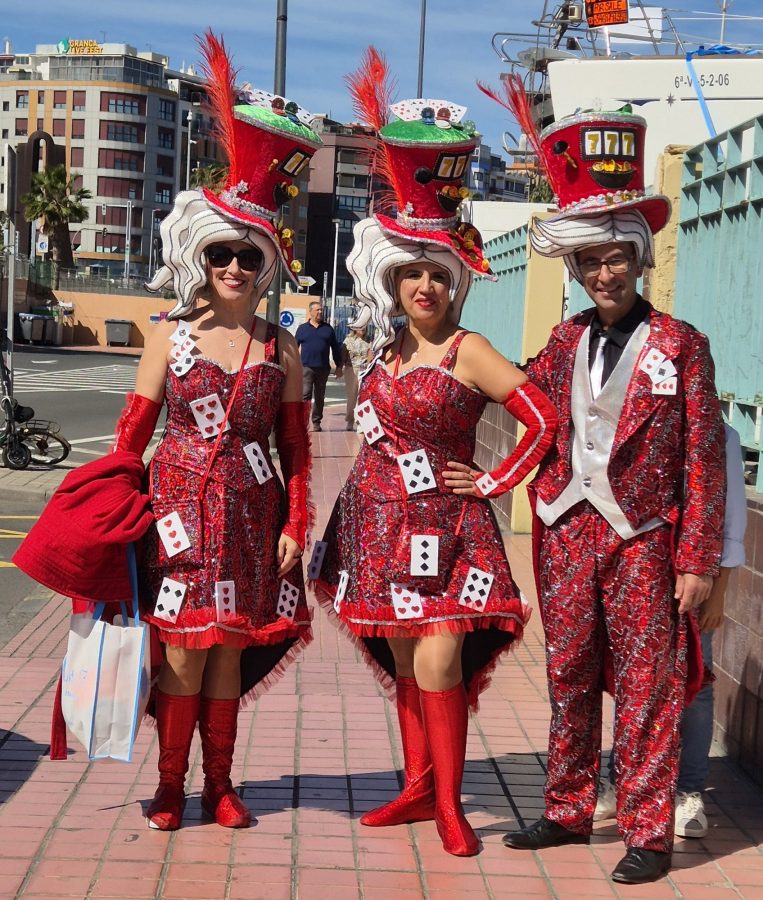
With the engine repaired and carnival over, we rented a car for the day to take a trip around this beautiful island of Gran Canaria to visit the visit the impressive volcanic landscape, fields of Aloe Vera and wonderful mountain villages.
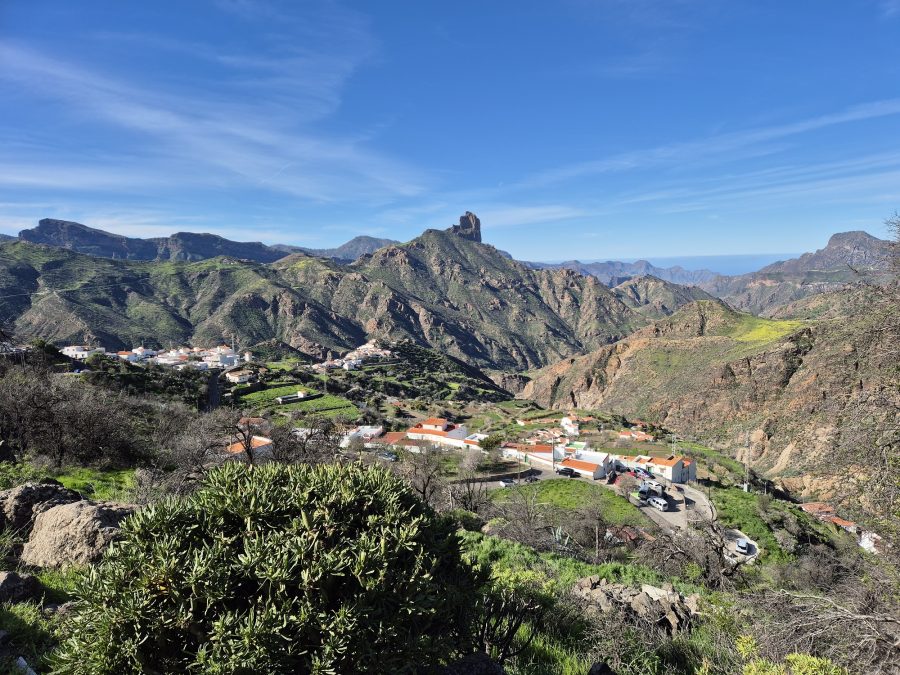
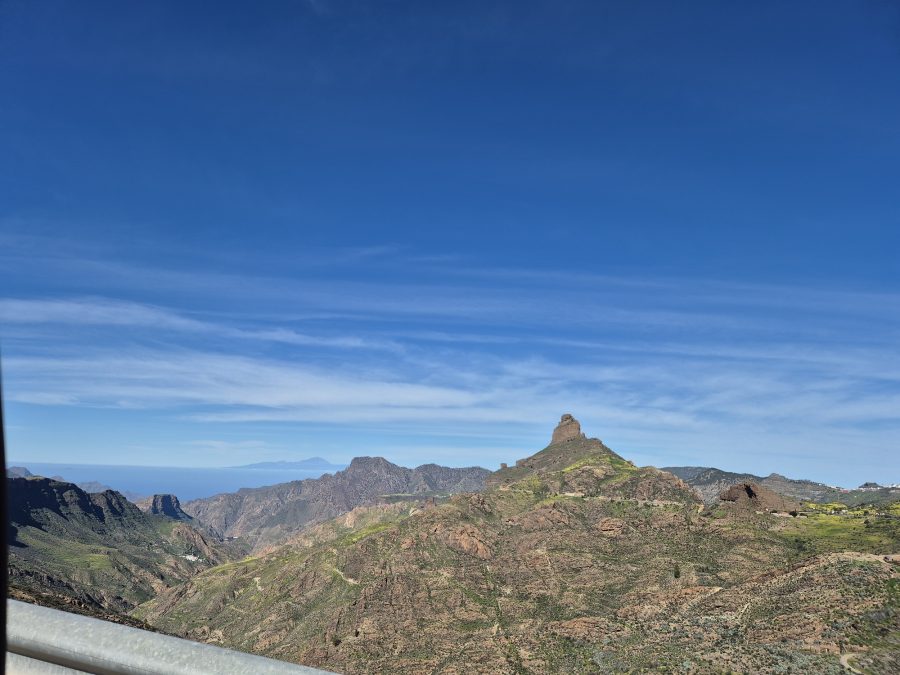
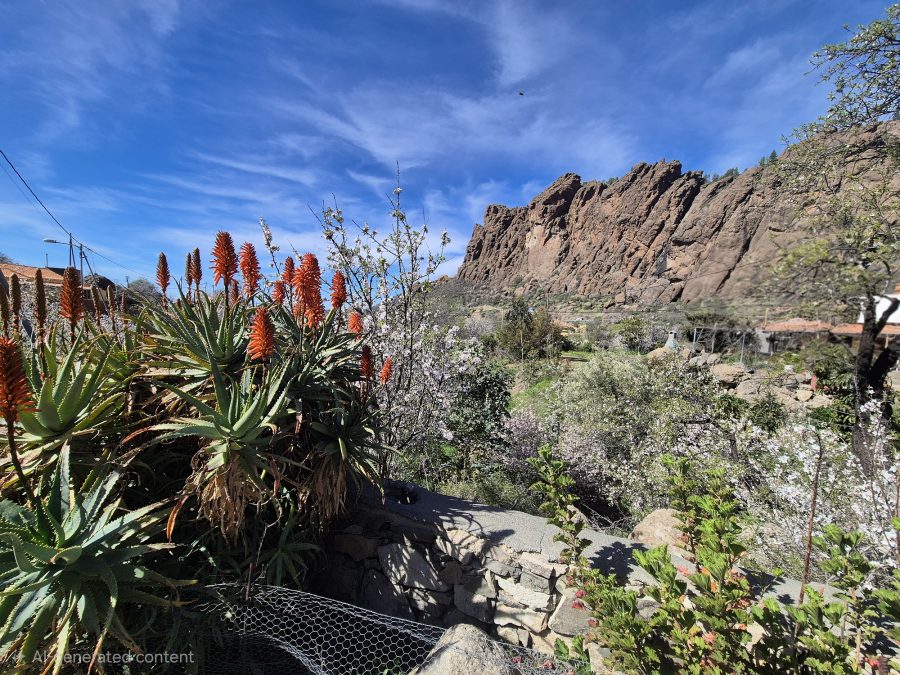
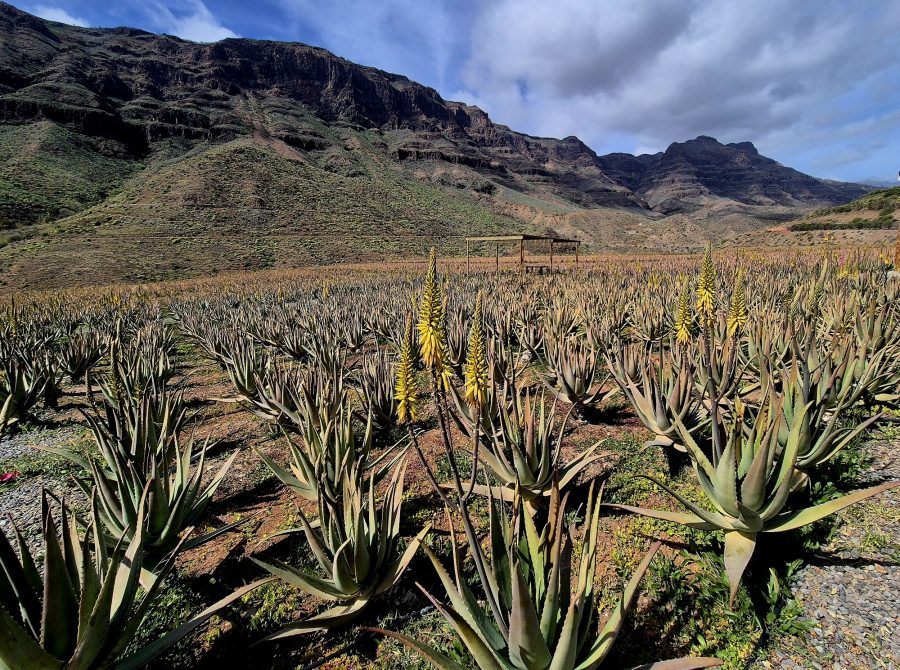
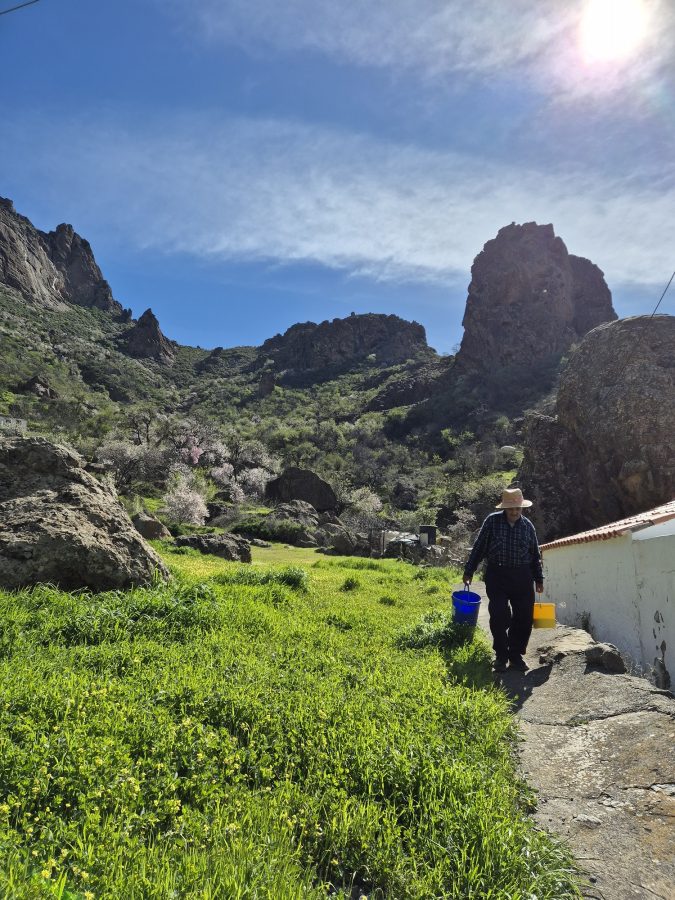
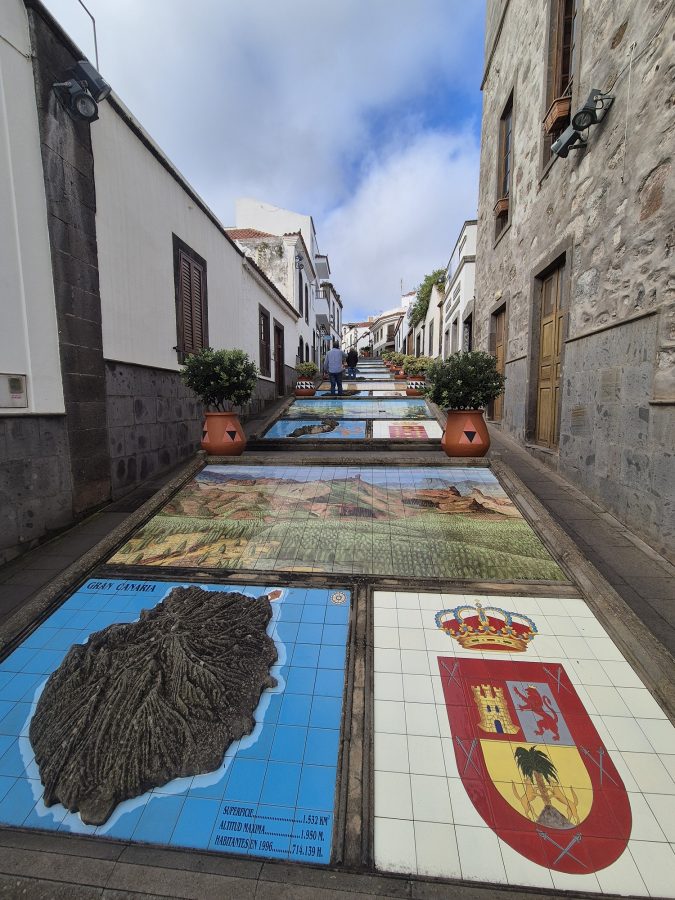
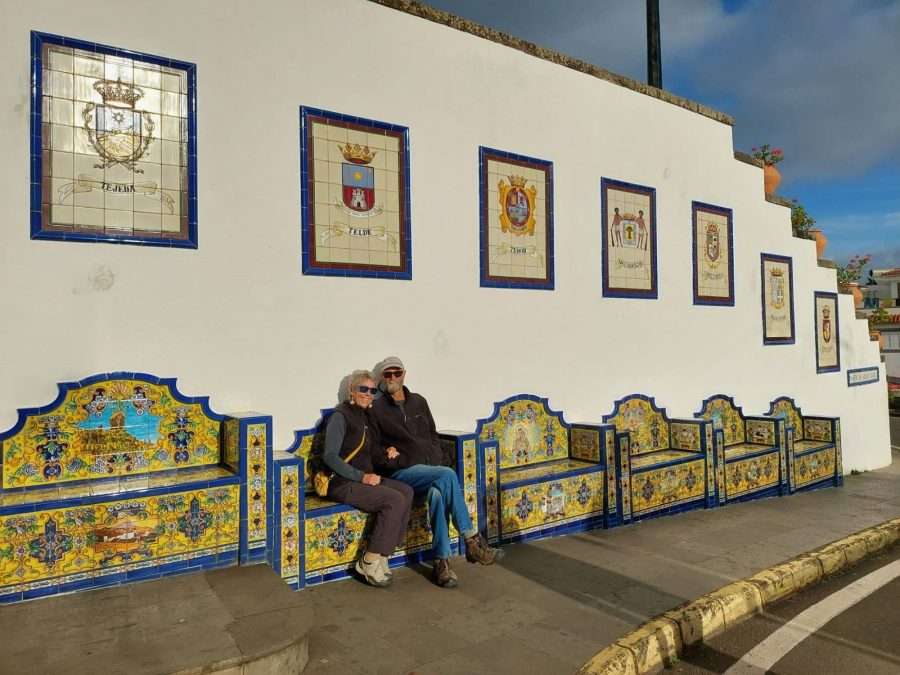
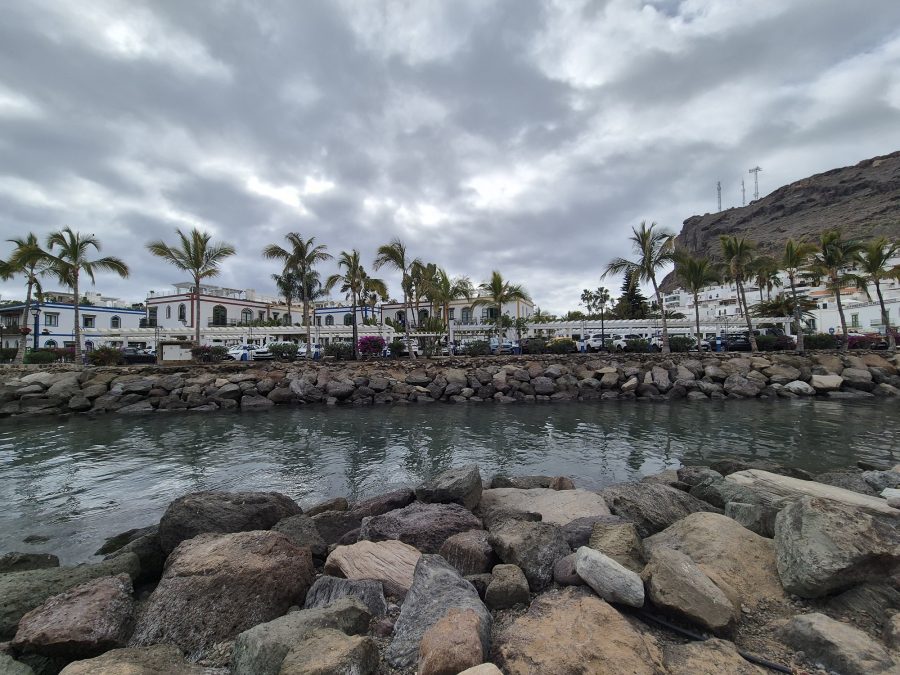
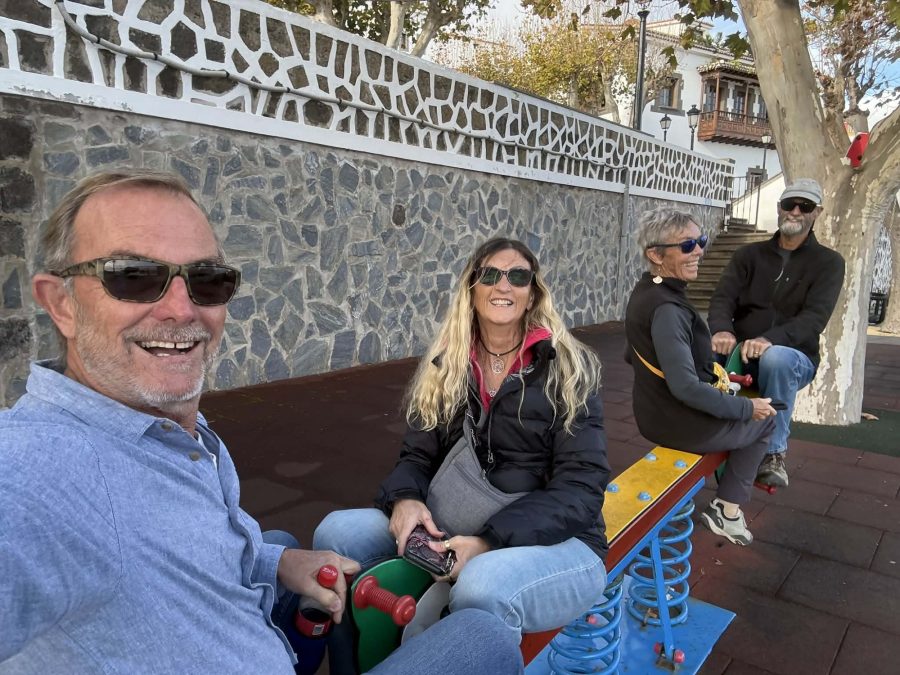
What a fabulous day we had. There is never enough time to see it all, but we make the most of our time in each place. Now time to move on, again.
Cape Verde is a 10 island volcanic archipelago off Africa’s West Coast, and that is where we are headed next. They lie 800 nms to the south, so, it is once again, very important to wait for a good weather window to leave for the 7 or 8 day passage. The winds that blow down from the north Atlantic around the Canary Islands can cause a strong ventouri affect behind the volcanic mountains, combined with strong currents that run between the islands.
Where do I start! What an INCREDIBLE time in your journey. The scenery, the endless colours everywhere, the amazing residential construction beneath the overhanging rocks……………….! Thank you for sharing all this, and so much more. Importantly, you are both fit and thriving, and the boat breakdowns are no match for you! We miss you so much but are lifted by the understanding of the joys that accompany your every day.
With dearest love and biggest hugs.
Tricia 🤗🤗 xxxx
Loving all of your photos and journey. All the memories come flooding back. One of the places I haven’t seen was that Spanish village built into The Rock. That looks fabulous.
Love your new stove!
Sail on amigos!!
Tremendous reporting! So impressive. Congratulations to you for all that you are doing on land and at sea.
Be safe,
Elaine
What a wonderful life seeing the world! So many beautiful places that so few get to see & visit. I enjoy following your journey. Consider putting dates on your posts as you travel. It seems like maintaining your boat is a full time, very necessary task. Be safe!